7 min read
Growing Peppers in Pots
Help container peppers get through cool starts and hot afternoons, then pick fruit at the stage that suits your cooking.
On this page
The first pepper often appears while the plant still looks too small to carry it. By the end of a warm summer, the same plant may have a branch leaning under several fruits. Good container peppers need root room, warm conditions, and regular water, but the decisions change during the season. The pot that felt safe on a cool spring doorstep may be too hot against that same wall in midsummer.
Decide at the outset whether you want green cooking peppers, sweet ripe fruit, or small hot peppers that you can pick by the handful. A full sized bell takes more time to color than to reach its green harvest stage. A compact hot variety may give you a useful crop from a smaller footprint. Pay attention to the cultivar's expected size, heat level, and maturity range rather than relying on the fruit shape.
Buy the plant with a good start
Where summers are short, peppers benefit from an indoor head start or a sturdy nursery plant. Seeds need warmth to germinate and seedlings need strong light once they come up. If you have no bright spot or suitable grow light, a well grown transplant is often an easier beginning. Look for a straight, sturdy stem, healthy leaves, and a root ball that holds together without a dense coil at the bottom. Inspect the undersides of several leaves before buying, particularly where nursery plants are packed tightly.
Look for an early cultivar if your warm season is short or nights are consistently cool. If you want an assortment of colors, remember that the green stage often comes before the final cultivar color. A fruit may finish red, orange, yellow, or another shade depending on the variety. A packet that shows several colors might be depicting the stages of one variety or a mixture of varieties. Label the pot when you plant so you know what maturity should look like.
Give purchased plants several days to adjust to the actual sun, wind, and temperature. Start in a sheltered position and increase direct exposure gradually. Wait until frost risk is over and nights are reliably warm before leaving the pots out. If you are just a few days early, keep the plant in a nursery pot and bring it in for the coldest nights rather than installing it in a container you cannot lift. A pepper stalled by cold may take weeks to grow out of it.
Set up a root zone you can water evenly
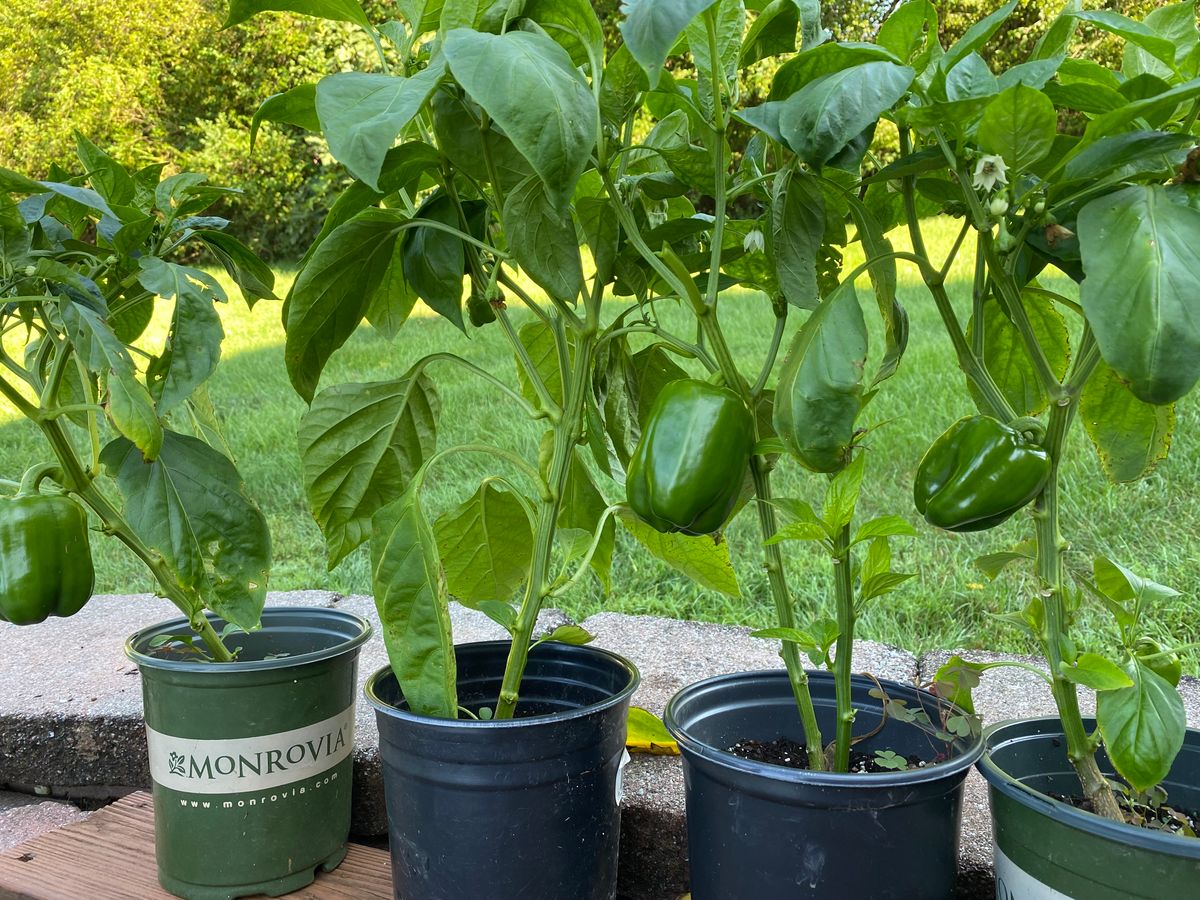
Choose a container that drains well and stays stable in wind. A compact pepper can often grow in about five gallons of potting mix, or roughly nineteen liters. A large sweet pepper benefits from a larger pot where summers are dry. Grow one vigorous plant per pot so it can take up water without sharing a cramped root zone. Check the holes while the container is empty. Use pot feet or other stable supports if the surface seals the openings.
Use fresh container mix and moisten it before planting. Set the root ball at about the same level it was in the nursery pot, then water and let the container drain. A short stake added now is easier to place without damaging new roots. Tie the main stem loosely. Add a separate tie higher up later if a branch starts to lean. A heavy fruit can snap a fork in the stem when it catches the wind, even if the plant held it upright on a calm day.
Pots can sit together in a row if each plant receives enough sun and air. Move the containers apart once leaves begin to overlap heavily. Make sure you can reach all sides, because pests and ripe fruit often show up under the canopy. Place a label where you can read it from the path. The pot most likely to get skipped on a hot day is the one hidden behind another plant or in a corner that forces you to step over something.
Let the plant set fruit at its own pace
Pepper flowers usually contain both the parts that produce pollen and those that receive it. Small vibrations from wind or insects can help pollen move. When several flowers drop without making fruit, look first at recent conditions. Sustained heat, chilly nights, irregular water, and a stressed root system can all interfere with fruit set. In a very hot location, try protecting the pot from reflected afternoon heat while keeping the plant in adequate light. If a cold spell caused the loss, look for the next set of flowers after the weather improves.
Some gardeners remove very early flowers on a little transplant to give it time to grow. On a strong plant that has settled into its final pot, you can leave the flowers and see what happens. When comparing this choice, use similar plants and note the dates. Removing flowers from a larger plant and leaving them on a weaker one will not tell you much. A simple record of when flowers opened and when fruit appeared is more useful than counting every flower.
Feed according to the directions for the potting mix and a suitable container fertilizer. A new mix may already be fertilized. Too much nitrogen can produce soft leafy growth and slow fruiting. If you see yellowing, check where it started, how wet the mix is, and whether the roots have filled the pot. Different nutrient problems can look similar from above. A constantly wet root zone cannot be fixed by adding more feed.
Learn what changes in midsummer
Check moisture below the surface when the weather turns hot. Water thoroughly, then let the container drain. If the whole pot dries within a day even after a thorough watering, protect the container from direct afternoon sun or move the plant to a larger container if it can be done without too much stress. A dark pot near a masonry wall can heat the root zone even when the leaves get a desirable amount of sun. A light outer sleeve with an air gap can shade the sides, provided it does not block drainage or hold water.
Fruit with a dark sunken patch at the blossom end can have blossom end rot. The affected fruit will not heal. Consistent root moisture and good root function can help protect later fruit, since the disorder is linked to calcium delivery as the fruit expands. A pale papery patch on an exposed side can be sunscald. Leave healthy leaves in place and avoid stripping the canopy just to make picking easier. Look for fruit damage after a branch bends or a support fails, exposing peppers that were formerly shaded.
Aphids may gather around new growth and leave sticky residue. Check the lower leaf surfaces and look for predators before deciding whether a small colony needs attention. A gentle water rinse may dislodge aphids on a well supported plant. If you notice distorted growth, spreading spots, or persistent wilt, photograph the symptoms and check with local gardening advisers. Pepper diseases and stress symptoms overlap, and the wrong treatment can damage both leaves and fruit.
Pick for the meal and for the plant
Check the shoulders and undersides before deciding to hold a ripe pepper for a few more days. Small skin cracks and areas pressed against a stake can deteriorate before the side facing the path shows any damage. If two peppers touch inside a crowded fork, harvesting the older one can take pressure off the younger fruit. Use a tray or shallow basket for ripe bells so they do not get dented beneath heavier produce. Sort any with bruises separately and use sound damaged fruit promptly.
Harvest at full size while green if you like that flavor or need to lighten the load. Leave some fruit for its full mature color if the season is long enough. A colored fruit often has a different sweetness and aroma, and it has used the plant's resources for longer. Keep a record of how long one tagged fruit took to change color. If frost is approaching, pick sound full sized fruits for use rather than relying on every one to finish outside.
Clip the short fruit stem with clean shears and support the branch with your free hand. Use care with hot pepper varieties, especially when cutting fruit or handling its seeds and inner membranes. Avoid touching your eyes, and wash hands and tools after handling. Keep mild and hot harvests in separate containers if the fruits look similar.
Watch for sun on exposed fruit after a stem breaks or the container is turned. A pale papery patch on the exposed side can be sunscald, particularly in strong heat. Keep healthy leaves around fruit and move the pot gradually when changing its exposure. More fertilizer will not repair the damaged patch.
At the end of the season, compare the fruits you actually used with the ones that stayed on the plant. A small pot that yielded just enough hot peppers may be a good use of space, while a sweet pepper that colored one fruit before frost may call for an earlier cultivar. Check the roots before emptying the pot. If they occupied nearly all the mix and watering became difficult, plan for a larger container or choose a smaller plant for the same spot next season.
Back to top