7 min read
Growing Cucumbers on a Trellis
Use a sturdy support to keep vining cucumbers within reach and make the most of a narrow bed.
On this page
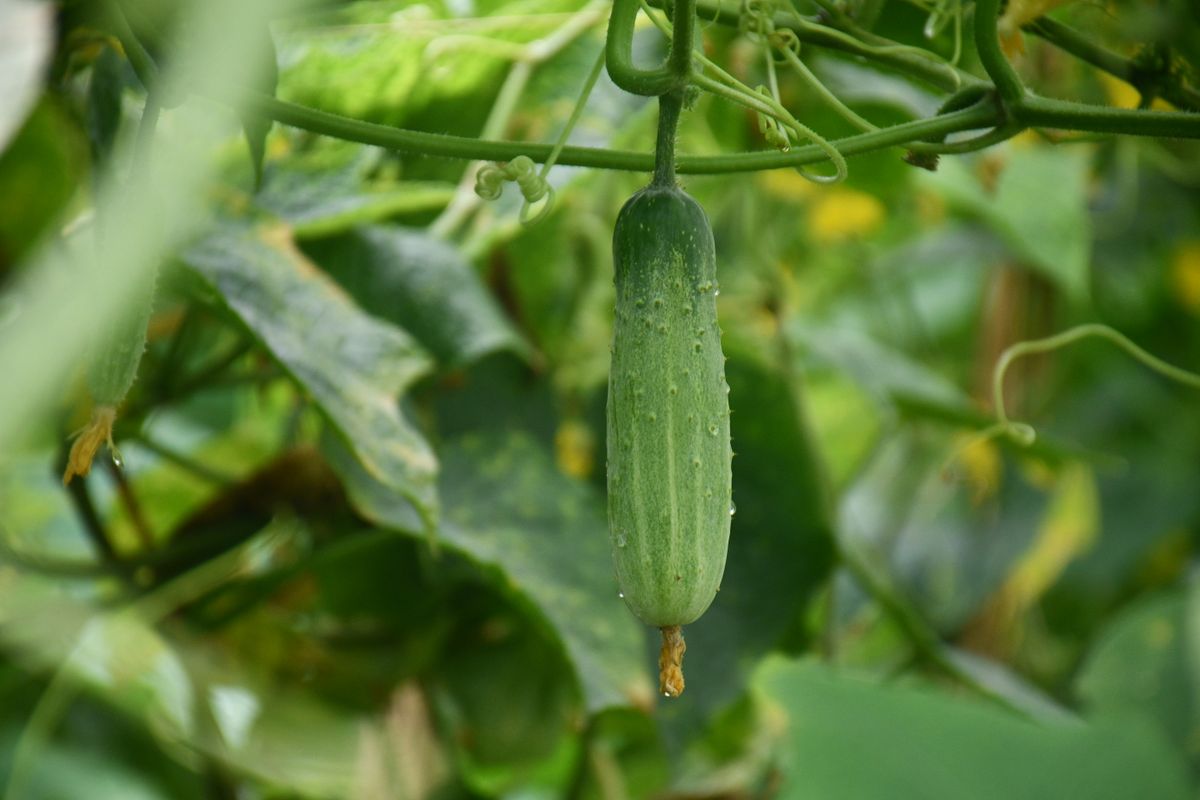
A cucumber vine gets away from its gardener quietly. The first tendril catches the support, the leaves double in size, and then a fruit appears behind the trellis where a hand can barely reach. Set up the support with harvesting in mind before the seed goes in. The easiest trellis to use has enough room to reach through the openings, a stable base, and a side you can walk along with a basket.
Growing cucumbers vertically frees ground for a smaller crop and makes it easier to see leaf problems and pick fruit. It also puts the plant into the wind and can increase its need for water. The arrangement pays off when you match a vining variety to the support, give the roots warm soil, and visit the plant often once it starts producing.
Choose a vine and a reachable support
Look for a packet that describes a climbing or vining habit. Bush types make short runners and are useful in pots or tight beds, but they rarely need a tall structure. Decide whether your kitchen uses small pickling cucumbers or larger slicing types. Each will produce better quality fruit if you know the size at which it should be picked. Leave room for the particular cultivar rather than assuming that every vine needs the same width.
Many cucumbers bear separate male and female flowers on the same plant. Male flowers often arrive before the first female blooms. A female flower has a small cucumber shaped ovary immediately behind its petals. Pollinating insects move pollen between flowers on common garden varieties. Some varieties set fruit without pollination and are sold as parthenocarpic. Others are predominantly female flowering and may need a pollen producing partner unless they also set fruit without pollination. Check the packet when you choose the seed and keep any separate pollinizer seed supplied with it.
For most small gardens, five to six feet of accessible height makes picking easy. Set the structure along a side of the bed that preserves light for shorter neighbors. In the Northern Hemisphere that is often the north side, and in the Southern Hemisphere the south side. Watch where shadows actually fall if a wall or neighboring building changes the light. Leave a path on at least one side and avoid squeezing the trellis against a fence if you will need access from both sides.
Build for a mature plant on a windy day
A wire panel with generous openings provides places for tendrils to catch and lets a hand reach past the leaves. A sturdy frame with garden netting weighs less, but the net has to stay taut and attached as vines load it. Very small openings can trap expanding fruit. Check plants frequently and gently move young cucumbers away from any hole they have started to grow through. Use materials with smooth edges in places where you will reach or lean.
An A frame straddles a bed and makes a low shaded space under the plants. An upright panel is simpler where you need to keep the path open. Drive or otherwise secure the supports according to the site and materials. Wiggle the structure before planting. If it rocks while empty, it will move more once the leaf canopy catches the wind. A balcony trellis needs independent anchoring and a safe location. Do not tie it to an exterior railing without checking what is allowed. Keep fasteners and wire ends away from fingers and eye level.
Water the bed before sowing if the soil is dry. A warm, sunny location and well drained soil give cucumbers a head start. Sow after frost danger has passed and the ground has warmed, following the packet depth and spacing. Many cucumbers germinate readily once soil temperatures are around 70°F, or 21°C. In a short season, start a few plants indoors in individual cells shortly before planting out. Harden them off and move the root balls with as little disturbance as possible. A young, sturdy transplant generally takes off more easily than an old, flowering plant crowded into a tiny cell.
Help the first tendrils catch
Place the seed row within reach of the trellis base, with enough room to water and weed along it. When a runner is long enough, guide it toward the support. A loose, soft tie can keep it in position for a few days. Leave enough slack for the stem to thicken, or use a tie in a figure eight so the stem cannot rub directly against the support. The fine tendrils will take over. Do not thread an entire growing tip through several openings, because it will be difficult to reposition later.
Look at the bottom foot of the plant during training. If the stem curves down sharply between soil and support, move the tie closer to the next leaf. A clean vertical path also makes it easier to spot pests near the crown. Pinching out a healthy main shoot is usually unnecessary in a home trellis planting. Many vines fruit on side shoots. Prune selectively if a particular cultivar requires training or a broken, diseased, or misplaced stem needs to come out. Leave enough foliage to support the crop.
When plants are small, lightweight row cover can protect them where cucumber beetles are a known problem. Secure the edges and remove the cover when flowering begins on bee pollinated types. Inspect plants anyway. Damage on seedlings can be severe before a large vine would show much effect. If a plant wilts and stays wilted while nearby plants look normal and the soil is moist, ask for a local diagnosis. Bacterial wilt is one possibility in areas where beetles carry it, but a broken stem, damaged roots, or other disease can look similar.
Protect the fruit while it is still forming
Water deeply enough to moisten the active roots. Keep the soil moisture reasonably steady through flowering and fruit development. A mulch can reduce evaporation after the soil is warm. Leave a small open area around each stem so you can see the crown and keep it from staying wet. Irrigate at soil level where possible. When you water overhead, do it early enough for leaves to dry. Good spacing helps, especially as older leaves form a dense layer near the base.
A tiny fruit that turns yellow and drops can be a sign of incomplete pollination, though heat and other stress can contribute. Check whether the plant is flowering, whether bees can reach it, and whether you can find both kinds of flowers on a variety that needs pollen. Where insects are scarce, you can try moving pollen from a freshly opened male flower to the center of a female flower with a clean small brush. Use flowers that are open and dry. Treat this as a small test with a few tagged flowers so you can tell whether it made a difference.
Powdery white patches on aging leaves and sharply angled yellow spots can point to different leaf diseases. Photograph the top and underside before removing samples. Compare the pattern against local guidance, since disease pressure varies by area and season. A few affected leaves at the end of harvest do not necessarily justify treatment. Early and rapid spread is more consequential. The notes will help you decide whether to try a cultivar with a specific resistance next year.
Follow the fruit through the canopy
On a shared trellis, mark the base of each cultivar with a weatherproof label and leave space between plants to see where the runners originate. This is especially handy when a pale slicing cucumber sits beside a dark pickler. Mature foliage can hide a surprising amount of the structure. Keep a small pair of shears nearby so harvesting does not depend on remembering a tool.
Pick according to the cultivar description. A small pickling type may be ready while a slicing type of the same length still has some growing to do. Check under the trellis and behind leaves at least every other day during peak harvest. Snip the short stem with shears while supporting the fruit. Pulling by hand can dislodge the vine or split the skin at the stem end. Take oversized fruits off the plant as you find them. Large fruits containing ripening seeds are usually past their best eating texture and can slow further production.
Track the fruit quality from week to week. If a fruit tastes intensely bitter, discard it and do not keep tasting from it. If all the fruit from a particular plant is affected, remove that plant and try another cultivar next season. Check water and heat conditions when ordinary quality declines, but avoid trying to salvage an unusually bitter cucumber.
Walk around the trellis after a week of vigorous growth. Fruit that develops behind a narrow opening can get wedged as it enlarges. Guide the vine while its tip is pliable and leave enough access to cut a ripe fruit without having to pull its stem through the mesh.
At season's end, cut the vines into manageable lengths before trying to pull them free. Clean reusable ties and supports. Move the next cucurbit crop to another bed if you have room, especially after recurring soil associated trouble. If the harvest was hard to reach, change one physical feature before you plant again. Shortening the trellis or adding a narrow path behind it may improve the next harvest more than changing varieties.
Back to top