7 min read
Growing Thyme in Dry Containers
Use a sunny spot, a freely draining mix, and small harvests from young stems to keep thyme compact and productive.
On this page
A pot of thyme can sit beside a pot of parsley and need water on a different day. The two are easy to treat alike when you walk past with a watering can, especially if the pots look similar. Thyme prefers a mix that drains and dries a little between thorough waterings. The goal is to keep the roots supplied while leaving air in the mix. Thin, woody stems and tiny leaves do not make the plant immune to a completely dry root ball.
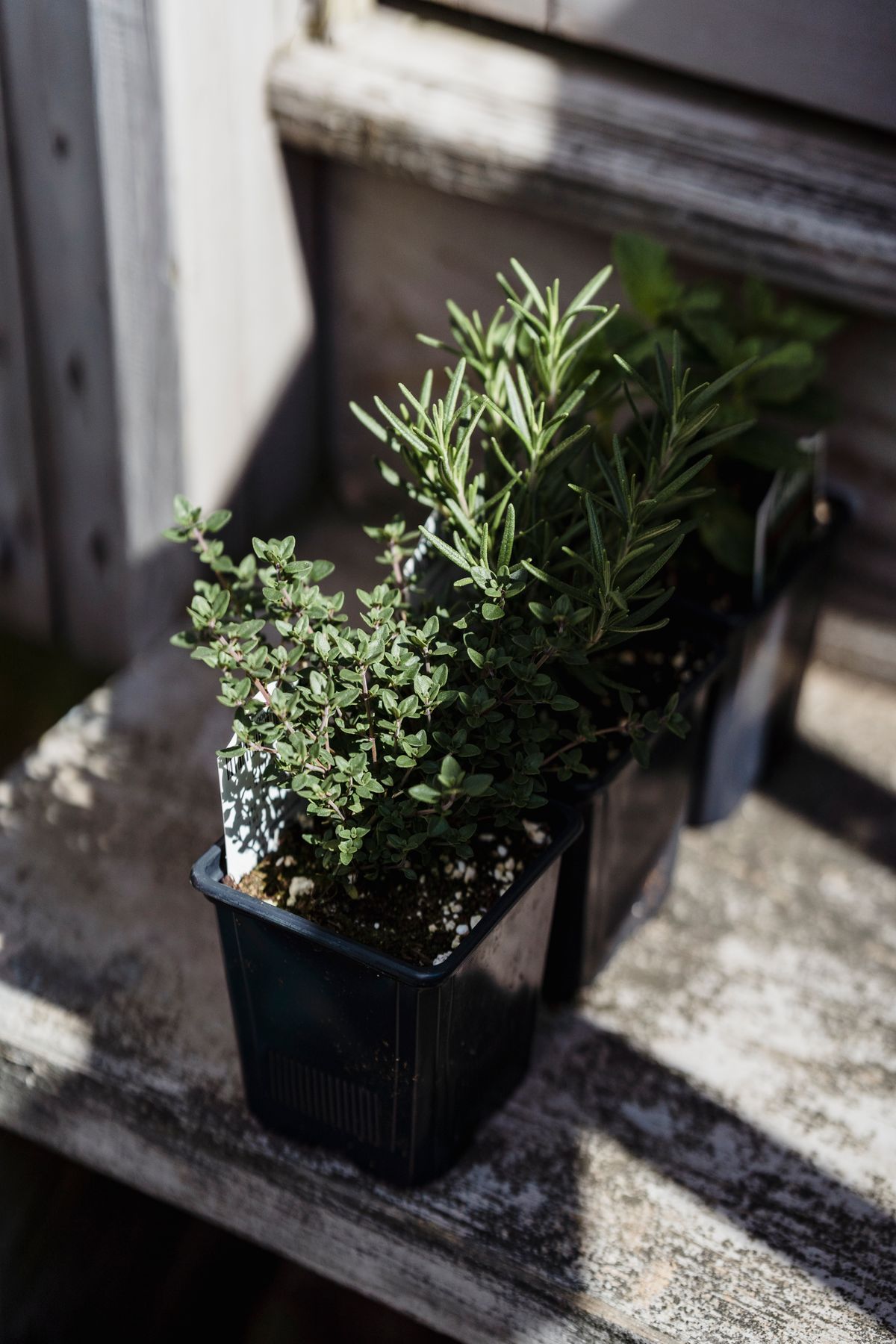
Pick a thyme you want for cooking. Common thyme grows in a small upright mound with the familiar savory scent. Lemon thyme brings a citrus note and may have green or variegated foliage. Creeping thymes are often sold as ground covers. Check the label and smell a leaf if you are buying for flavor. An attractive spreading plant can be less practical to harvest than a compact upright one with longer sprigs.
Look at the sun and the rain before you pick the pot
Thyme generally grows best with plenty of direct sun. Place it where you can check the light near midday and late afternoon. A bright windowsill may work indoors if it gets enough sun, or you may need a suitable grow light. Outdoors, choose a place with some airflow around the plant. A wall can provide shelter, but a narrow slot between larger pots may stay damp after rain and shade the lowest shoots.
Watch where roof runoff lands. Repeated drips can keep a small pot wet long after neighboring containers have drained. Slide the pot a few inches clear of the line. A raised bench can also improve access and keep the bottom holes from pressing against wet paving. Set the container on a firm surface. A shallow footed pot that rocks in wind can dry one edge faster and make the stems difficult to clip.
Choose a pot only moderately larger than the root ball when first planting. Unglazed terracotta can be useful in a mild humid climate, since it dries through its sides. In a dry, windy location you may prefer plastic or glazed ceramic to slow moisture loss. Any material can work if you check what is happening below the surface. Make sure the drainage holes stay open. A saucer is useful for protecting a surface if you empty it after watering.
Build drainage into the mix
Use a potting mix that stays open after repeated watering. A commercial mix for herbs or suitable drought tolerant plants can be a starting point. If a general mix stays dense and wet, adding coarse perlite or pumice can improve air space. Avoid filling the pot with fine garden soil, which can compact and hold water poorly in a container. A gravel layer at the bottom occupies root space and does not replace a mix that drains through the full depth.
Set the plant at about the depth it was growing in the nursery. Loosen the outermost circling roots gently if necessary. Firm the mix lightly around them without packing it down. Leave enough space below the rim to water evenly. Water once to settle the plant and let the pot drain. The next watering depends on the weather, mix, and pot size. Use your finger or a skewer to learn how long it takes the middle of the root zone to lose moisture.
If you want to start thyme from seed, sow according to the packet and expect the young plants to stay small for a while. A rooted cutting or a small nursery plant will give you sprigs sooner. A named variety may also come true more reliably from a cutting than from seed. Keep the label so you can find the same plant again if its flavor or hardiness suits your conditions.
Check the root zone instead of following a calendar
Wait until the surface and part of the upper mix have dried, then check deeper before watering. A skewer that comes out dark and damp suggests the lower mix still holds moisture. When the pot needs water, apply it slowly over the whole surface and allow excess to drain. Try not to give repeated little sips, which can leave some roots dry while the surface stays damp. If the mix has shrunk from the edge, water more slowly and confirm that the center has become moist.
During a hot windy week a small container can dry faster than you expect. After rain and in cool weather it can stay wet for days. Group thyme with pots that need a similar watering rhythm if that makes them easier to manage. A separate saucer makes it possible to see where the runoff went and whether the pot is still standing in water. Avoid moving it into an oversized planter merely because the weather was unusually hot for a few days.
Pale leaves and dark soft stems can indicate trouble with persistently wet conditions. A dry plant may feel brittle or lose vigor, and some damage from wet roots can also look dry above ground. Inspect the mix first. If the plant has been sitting in water, clear the drainage and check whether the roots are firm. A seriously rotted plant may be hard to rescue. Correct the pot and watering before planting another one. Brown wood inside an otherwise green mature plant can also be normal aging.
Clip above living leaves
If the outside stems are green but most leaves have fallen from the inside, examine how the pot faces the sun. One side may be growing into a larger neighbor or over a damp ledge. Give the mound some space and rotate a moveable container a little at a time. Wait for young shoots to fill in before taking a second substantial harvest. On an old plant with healthy trailing stems, you can try pinning one stem against the surface of a nearby small pot of mix. Keep the tip above the mix and check for roots after a period of active growth. Once it has roots of its own, detach it with clean scissors and give it time to settle before clipping.
Cut tender green sprigs with clean scissors. Leave foliage below the cut so the branch can continue to grow. Take a few tips from several sides rather than shaving one side down to bare wood. Thyme can become woody in the center as it ages. A plant trimmed lightly during active growth can stay compact longer. If you need to reduce a very old plant, cut a small section first and wait to see where fresh shoots appear. Deep cuts into bare stems may not fill in well.
Harvest for drying on a dry day when the foliage smells strong. Remove damaged leaves and spread the sprigs in a thin layer in an airy place away from direct sun. Store them only once dry and crisp. A small labeled jar preserves the identity of a lemon scented variety when the stems look similar after drying. Fresh sprigs can be clipped as needed and washed shortly before use. If you take a large harvest, leave enough leafy tips across the plant for it to recover.
Let part of the plant flower if you want to observe visiting insects. You can still take young sprigs from other sides. A gentle trim after the flowers fade can restore a compact shape while preserving healthy leaves. Stop taking heavy cuts late in the season if the plant is about to face cold and short days. A small amount of living foliage is more useful to a plant entering winter than a tidy silhouette.
Replace woody plants before they stop yielding
A thyme that survives winter in the ground may be more exposed in a pot. Protect the container according to your climate and check that winter rain drains away. In mild regions, a bright sheltered spot may be enough. If you move it indoors, give it strong light and water less often while growth is slow. Watch for long weak shoots that tell you the new site is too dark. Gradually increase outdoor exposure again when conditions are suitable.
Start a backup plant from a healthy nonflowering tip if the old one has become woody and open. Remove leaves from the lower portion and insert it into a clean moist propagation mix. Keep it in bright indirect light while it develops roots. Avoid letting the mix become saturated. Once the cutting grows steadily, move it into its own small pot. Keep the parent plant until the new one has enough foliage to harvest. That gives you a continued supply and a chance to keep the thyme whose flavor made it worth growing.
When you replace an aging thyme, try rooting a few soft stems before removing the parent. Keep those young cuttings in a separate small container with suitable moisture while they form roots. The dry rhythm that suits the established parent may be too severe for cuttings that cannot yet take up water.
Check the old plant after lifting it from its pot. A dense root ball with almost no loose mix may explain why you had trouble watering it evenly. Open mix and an appropriately sized pot make the next plant easier to judge. Keep the same sunny spot if the last plant grew well there, and adjust only what the roots and the watering pattern tell you to change.
Back to top