8 min read
Basil for Repeat Harvests
Learn where to cut a basil stem and how to keep new leaves coming through the warm part of the year.
On this page
The first basil harvest is easy to get wrong. Pick the largest leaves one at a time and the plant looks bare on long stems. Take a growing tip from just above a healthy pair of leaves and two smaller shoots can grow in its place. A few weeks later those shoots give you two places to harvest. The difference is only an inch of stem, but it determines what you have to cook with after the first meal.
Start with the kind of basil you like to use. Sweet Italian basil usually has broad leaves and suits a generous harvest for pesto. Compact varieties fit a smaller pot. Thai, lemon, and purple basils bring different flavors and may have smaller leaves or different growth habits. Match the variety to the cooking you actually do. A plant that gives you a steady supply of a few fresh sprigs can be more useful than a crowded planter intended for a large harvest you rarely need.
Build a sturdy plant before asking for leaves
Wait for warmth before putting basil outdoors. It is a tender plant and is damaged by frost. Chilly nights can slow it even when afternoon temperatures seem pleasant. If you start seed inside, use a clean tray and a fine starting mix. Sow according to the packet and move young seedlings into bright light as soon as they appear. Harden them off before planting out. A few days of gradually increasing light and wind can prevent the soft indoor leaves from burning or tearing.
Look closely at a supermarket pot. It often contains many seedlings packed together so it looks full at purchase. Each seedling needs some light and room as it gets larger. If the plants are still young and their roots separate easily, gently divide the clump into smaller groups and move them into their own pots. If the roots have knitted together tightly, keep the strongest starts and snip some of the extras at the base. Pulling a mass of roots apart at once can leave you with many weak plants.
Give the plant direct sun for much of the day in a mild climate. In a hot place, morning sun and some afternoon shelter can keep the leaves in better condition. Choose a pot with open drainage holes and enough mix to hold moisture between checks. Basil wilts when the roots dry and also suffers in a persistently wet pot. A container that becomes very light by lunchtime will be harder to manage as the canopy expands.
Find the cut by looking at the stem
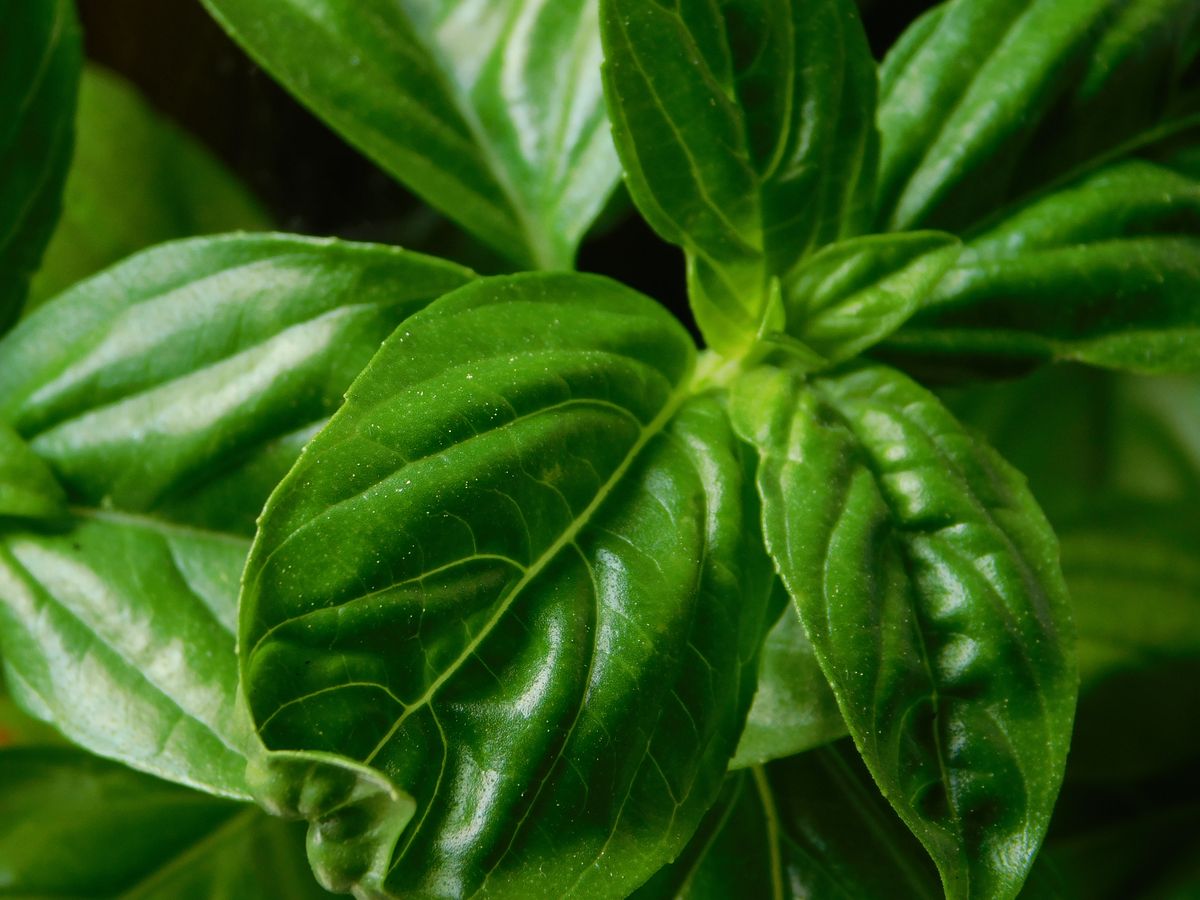
Let a young plant grow several pairs of true leaves before taking much from it. Trace the main stem from the top downward. At each node, a pair of leaves meets the stem, and a small bud often sits in the angle just above each leaf. Use clean scissors to snip the tip just above a node with healthy leaves. Leave those leaves and buds attached. They have a chance to make two new shoots, each of which can be cut the same way once it has enough leaf pairs of its own.
Use the tender stem and leaves you just removed. If you only need a little basil, take one tip from the largest branch. Rotate among branches on later visits. Avoid cutting every stem down to the lowest pair of leaves at the same time. A plant with enough foliage can recover and resume growth more readily. On a small plant, it is better to postpone a large kitchen harvest than to strip it bare.
If the plant is already tall, look for younger branching lower down. Shorten one or two overgrown stems to a healthy junction and wait for new growth before shortening the next ones. Leave several green leaves on every remaining branch that you want to keep. A long, woody basal stem with few visible buds is less predictable after a hard cut. You can start a replacement while you see whether the older plant fills back in.
Water the pot according to its weight
Check the mix just beneath the surface. Basil in an exposed pot may need frequent watering during active growth. Give enough water to moisten the root zone and let the excess drain. Empty the saucer if the pot would otherwise sit in water. If the surface has pulled away from the edges, water slowly in two passes so it reaches the center. A quick splash that runs straight out can leave the roots dry.
Keep the foliage dry when possible, especially late in the day. Space pots so the leaves do not form one damp mass. Feed at the rate suggested for edible container plants if the mix has no lasting nutrient charge. Extra fertilizer does little for a plant that lacks light or sits in wet mix. When growth gets pale or slows, look at how the plant dried after its last watering and whether new leaves still receive enough direct light.
A light wilt in hot weather should prompt a moisture check. If the soil is wet and the plant stays limp overnight, do not keep watering by reflex. Examine the drainage and the base of the stems. When leaves have yellow patches and a grayish growth on the undersides, downy mildew is a possibility. Seek a local identification before keeping a diseased plant among healthy ones. A well adapted resistant cultivar can be a useful choice after a confirmed problem. Yellowing from other causes may look similar from a distance, so check leaves closely.
Decide how you want to handle flowers
A developing flower stem often looks like a tight stack of smaller leaves at the tip. Cut it back to a pair of healthy full sized leaves if you want to keep harvesting leafy shoots. The plant will still try to flower as it matures. Look at the oldest branches each time you harvest and clip the shoots that are starting to form flower buds. If all the stems repeatedly flower and new leaves are small, start another plant while there is enough warm season left.
There is also a reason to let a plant bloom. Basil flowers can feed visiting insects, and letting one branch or a spare plant flower gives you a chance to see which visitors use it. Keep a separate plant for leaves if flowers are your goal on the first one. Decide ahead of time whether you need seed. Different basils may cross if they flower nearby, and seeds from a hybrid may not grow true to the parent.
For a large harvest, choose a day when the plant is well hydrated and the leaves are dry. Cut several branches, leaving healthy foliage across the plant. Bring the harvest into shade while you finish. Wash shortly before use and handle the leaves gently, since bruised basil can darken. Fresh basil is sensitive to chilling. A few cut stems can hold briefly with their ends in a clean glass of water on the counter. Change the water and discard stems that deteriorate.
Stagger plants instead of asking one to last forever
A healthy basil stem can also give you a backup plant. Cut a small, nonflowering tip from a vigorous plant, strip the lowest leaves, and put the bare stem end in a clean glass of water. Keep the remaining leaves above the water and give the cutting bright light out of strong midday sun. Refresh the water regularly. Move the cutting to a small pot of moist mix when roots have formed and before they become a tangled mass. Keep the mix evenly moist while the new roots establish. Wait for new leaves before making a large harvest. Use only a plant that has stayed healthy. Propagating from a plant with a leaf disease can carry the problem into the new pot, even if the first cutting looks clear.
Sow a small backup pot once the first is large enough for regular clipping. A second plant can take over when the older one sends up flowers faster than it makes large leaves. In a short season, buy or sow both early enough to establish outdoors. Where winters are mild or you grow under good lights, adjust the plan to the actual warmth and light rather than expecting indoor plants to behave like plants on a summer patio.
Record the actual date of the first cut. Comparing it with the day you planted shows how much lead time the next batch will need.
When the plant forks, follow both new shoots before making the next cut. They may not grow at the same speed. Cut the stronger branch while leaving the smaller one to build leaves, and turn the pot if the difference follows the direction of light. You can harvest evenly over time without insisting that the two branches look identical.
Use your kitchen habits to set the size of the next planting. If a few shoots supply what you need each week, one or two plants can be enough. If you want several batches of pesto, grow a separate group for larger cuts and leave a smaller pot for everyday sprigs. Label varieties as soon as you sow them. A single distinctive purple plant may be easy to recognize, but green types can be difficult to tell apart before you taste them. The easiest harvest to repeat starts with knowing exactly where you cut last time and seeing what grew back there.
Back to top