7 min read
Growing Mint Without Letting It Spread
Keep mint in a pot you can inspect, cut the stems that try to escape, and renew the plant before the roots fill it.
On this page
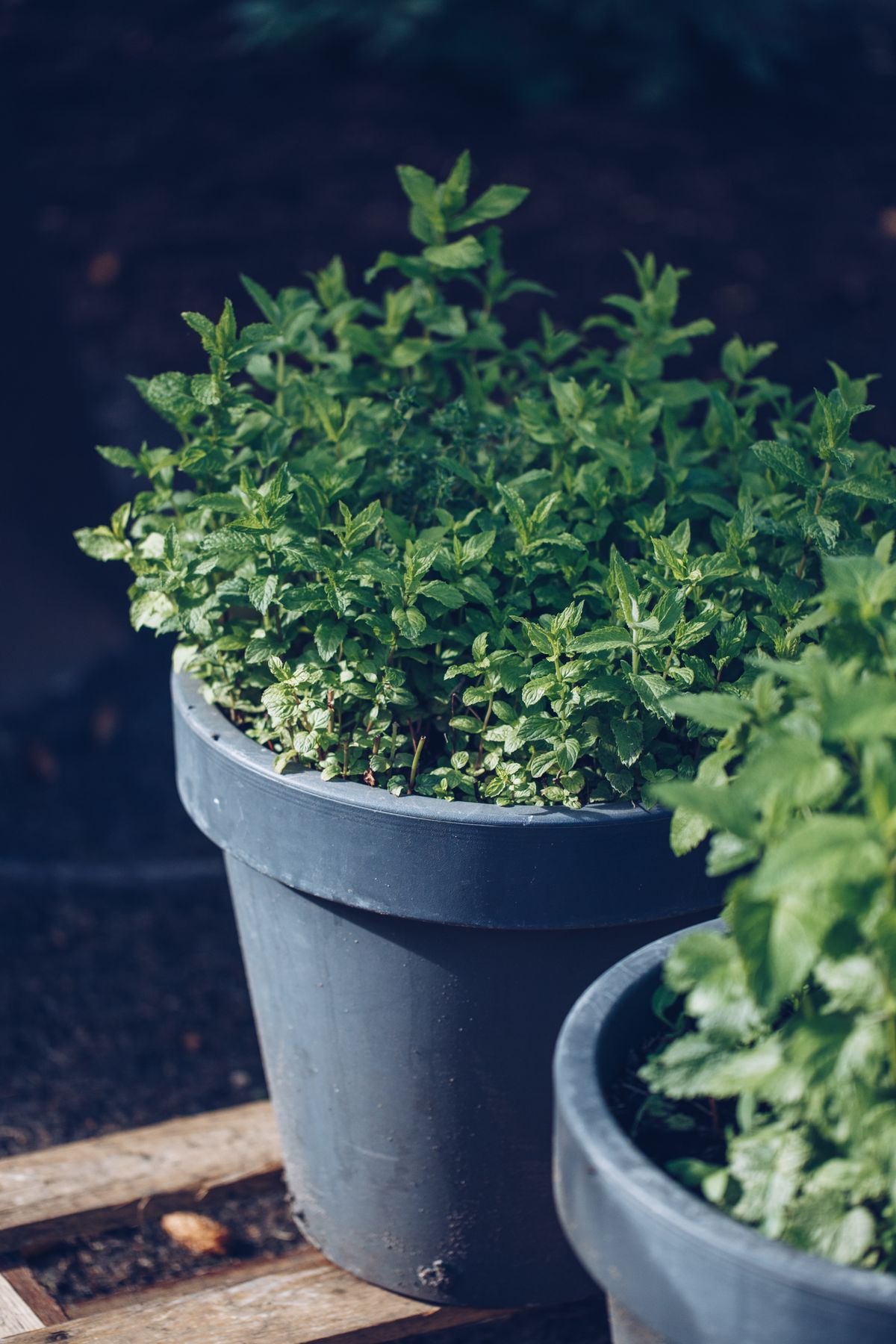
Mint often goes unnoticed until the first shoot appears on the wrong side of a path. Pulling that shoot can leave a length of creeping stem in the soil, ready to grow again from another node. The easiest time to limit mint is when you buy a small plant with all its roots inside one pot. Give it an aboveground container and a place where you can see the bottom and the sides.
Choose mint by smell and taste if the nursery allows it. Spearmint is familiar in many drinks and savory dishes. Peppermint has a cooler, sharper scent. Other cultivars range from soft and fruity to quite strong. Plants sold under imaginative names can vary in flavor. Start with one you will actually use. A healthy pot can supply more sprigs than a small household needs.
Pick a container you can inspect from all sides
A pot with drainage holes is essential. Place it on hard paving, a stable stand, or a saucer that you can empty and lift. Leave a gap between the pot and the garden bed. Mint can root through a drainage hole if the pot stands in soil. A stem that droops over the rim can take root when it touches damp ground. A bottomless pot or an ordinary container buried in a bed can slow the spread for a while, but roots can escape and the rim becomes harder to inspect.
Choose a fairly broad pot to give the new growth room. A twelve inch container is a reasonable start for a single young mint, with room to move up or divide it later. Use fresh potting mix that holds moisture without staying saturated. Porous clay dries fast in a sunny or windy spot. Plastic or glazed ceramic can make moisture easier to maintain. Keep an outdoor pot on a level surface so it will not tip once the stems reach outward.
Mint grows in sun or partial shade. Give it good morning light with some afternoon shelter in hot climates. In cool, cloudy weather it may do better with more direct sun. Notice whether the stems stretch toward the light. Long spaces between leaves and a thin plant can indicate the pot is too deeply shaded. If the pot stays hot and dry all afternoon, more frequent watering or a cooler position may matter more than an extra hour of sun.
Plant a named mint and watch the rim
Transplant a healthy nursery plant at about its previous depth. Water thoroughly and check that the container drains freely. Keep other varieties in their own pots so you can recognize them and manage the rate at which each grows. Mint can be propagated by seed, but named cultivars may vary from seed. A cutting or division from an identified plant is more predictable for flavor.
Look around the whole rim every week during active growth. Lift any long stem that has begun to arch toward a bed or a neighboring pot. You can cut it back to a healthy leaf pair and use the tender part. In a collection of patio herbs, make sure mint stems do not reach the mix of the pots beside it. A cluster of containers can be attractive and still be difficult to inspect. Leave enough room to turn the mint pot or move it out for a trim.
Check underneath periodically. A little root visible at a drainage hole is a sign to inspect. If the pot has rooted into the ground, lift it carefully, cut attached roots, and inspect the soil below. Remove visible mint growth and monitor the area for new shoots. Pulling only the leaves off established mint will not remove the underground stems. Dig along the runners and lift as much as possible. Repeat checks after rain, when the soil is easier to loosen and new shoots are more apparent.
Water for leaves without keeping the roots soaked
Mint makes the best tender growth when the mix stays reasonably moist. Feel the mix below the surface before watering and give enough water to reach the roots. Let it drain. If rain has filled a saucer, empty it. A sheltered pot may receive less rain than you expect even though the leaves are wet. On hot days check the root zone after the sun has moved away and compare the weight with the same pot just after watering.
A sudden need to water several times a day can mean the roots have filled the container. Slide out the root ball when the soil is lightly moist, support it with one hand, and see whether you can still distinguish much mix between the roots. If there is a dense mat, divide the plant or pot up a portion in fresh mix. Moving to larger containers repeatedly takes more space and makes it harder to control the plant. Dividing gives you a chance to keep the amount of mint you need.
Feed lightly according to the potting mix and container fertilizer directions if the plant is actively growing and needs it. Overfeeding can produce rapid, soft growth that is hard to contain. If new leaves are unusually small, inspect the pot for crowded roots and check the light. A mint plant with healthy roots and enough sun can recover from frequent clipping. A plant with a soggy root ball may wilt even while standing in water.
Take stems so the next harvest has somewhere to grow
If you move the pot for harvest, look at the paving underneath before you put it back. Old leaves and moisture can hide a runner that has followed a joint between slabs. Lifting it while it is still attached to the plant takes less work than trying to find the source after it separates.
Cut a sprig just above a pair of healthy leaves. Side shoots can emerge there, giving you a fuller plant. Pick the youngest healthy leaves for garnishes and take longer stems for cooking or making a drink. Leave green growth across the plant when harvesting a large batch. If one side has grown against a wall, harvest from the accessible side and turn the pot so the weaker stems have more light.
You can let some mint flowers open if you want to see visiting insects. The plant may devote more energy to flowering and make fewer large tender leaves at that point. Cut unwanted flower stems to keep fresh shoots coming where conditions allow. If you leave them for insects, check the longer stems around the flowers for contact with soil. Avoid letting flowers and stems fall into neighboring containers when you tidy up.
Watch for orange or rusty spots on the undersides of leaves, irregular yellowing, and a decline that spreads across the pot. Mint rust is one possibility where those symptoms appear. Remove badly affected material and get a local identification if you plan to propagate the plant. Starting a fresh healthy pot may be simpler than trying to rescue every division. A cluster of brown leaves on one dry edge can have a much more ordinary explanation. Look at the stems and moisture before making a decision.
Divide for vigor and keep the size you can handle
If only the middle of an older pot has died back, look for strong shoots around the edge before replacing the whole plant. The outer growth often has younger roots. Cut one section from the edge and shake loose the exhausted mix. Use a container only slightly wider than the division so you can keep track of how quickly it dries. Water after planting, then check for fresh shoots instead of taking the first green stems for the kitchen. The old center may have little value if it is woody, sparse, or unhealthy. Clean the pot before you reuse it and clear any roots that have threaded into its drainage holes.
In spring, or in another mild part of the growing season, slide a crowded plant out and use a clean tool to separate a healthy outer portion with roots and several shoots. Replant it in fresh mix at the same depth and water thoroughly. Keep it sheltered for the first few days if it wilts easily. Leave the pot where you can check for fresh growth before harvesting heavily. A division is ready for routine clipping when several sturdy stems have resumed growth.
Dispose of unwanted runners where they cannot take hold. A casual pile of moist stems on soil can become a second mint bed. Check local yard waste options if you need to discard a large amount. A labeled rooted cutting can also be given away with the advice to keep it contained. In cold climates, mint often dies back above ground and returns in spring, but roots in an exposed container face more cold than roots in the ground. Shelter the pot as appropriate for your region and keep it from standing in water through winter.
Walk past the pot a week after you have divided it and check for the one stem that already reaches the rim. A mint plant in a manageable container can supply useful leaves for years. Its roots are easier to keep where you want them when the plant lives in a spot you can see and reach.
Back to top