7 min read
Where a Peace Lily Grows and Blooms Indoors
Choose a light position that supports flowers, then check the soil before a drooping plant sends you for the watering can.
On this page
A peace lily often arrives in bloom and looks right at home in the dim corner that needs something green. Several months later, the white flowers have faded and the plant may still carry much of its original foliage. The corner can be bright enough to keep those leaves for a while without providing enough energy to make new flowers. Moving the plant to better light can help, provided you also watch how the pot dries after the move. The shift from a shaded shop bench to a sunny window should be gradual.
Observe a window before moving the pot
Give the plant bright filtered light. Start near a window where daylight reaches the leaves without a hot, sharply outlined beam lingering on them. In a room with an east facing window, early sun may be mild enough once the plant is accustomed to it. A west facing window can give an intense patch of sun late in the day. A thin curtain or some distance from the glass will soften that exposure. Check the proposed spot at more than one time before leaving the plant there all day. A bright noon reading does not tell you what the leaves will receive at four in the afternoon.
Compare the plant's current location with the new one on an overcast day as well. Objects near the window should still be easy to see without switching on a lamp. A projecting roof, nearby building or mature tree can turn a seemingly favorable window into a shaded one. The season matters too. In winter, the sun angle can reach a plant the summer sun missed. Keep the leaves off cold glass. A heater under the window may dry the pot rapidly from one side, so check its temperature before setting the plant directly over the vent.
Over the next several weeks, note the size, color, and orientation of new leaves. A plant stretching toward the light may grow lopsided. Turn the container a little from time to time when you want a balanced clump. A large difference in light on the two sides of a room may be better solved with a brighter position. Bleached or papery marks where direct sun touched the leaf are damage to existing tissue. Watch later leaves after you shift the plant to judge whether you corrected it.
Water by what the pot contains
Peace lilies prefer a mix that is lightly and fairly evenly moist through active growth. Check the top inch with a finger. When it begins to dry and the container feels lighter, water the root ball thoroughly and allow the excess to leave through the drainage hole. Empty the cover or saucer once the pot finishes dripping. If the mix has gone very dry, give it two slow passes. Water that immediately exits along the rim may have traveled around a shrunken root ball. Confirm that the whole pot gained weight after watering.
Leaves can droop dramatically in a dry pot. Feel the soil and lift the container before assuming that this is what happened. A plant that sags with damp mix can have damaged roots or be struggling in cold conditions. Adding water would prolong saturation. If the pot is heavy and the soil smells sour, remove the plant from its cover and inspect the drainage and root ball. Healthy roots have substance when you press them. Mushy roots or soft crowns suggest decay. Remove decayed tissue with cleaned tools and choose a well drained container that fits the healthy roots.
When the plant has drooped from dryness and the roots are healthy, a thorough watering should usually restore much of its firmness within hours. Some older leaves may retain damage if they wilted repeatedly. Note how the pot felt before the wilt and check a little earlier next time. A normal watering routine gives the plant moisture before all of the leaves have dropped. The next check may come sooner after a move into stronger light, while a cloudy winter can lengthen the time between waterings.
If you use a moisture meter, test it in soil with a known moisture level before trusting the reading from a single spot. A light nursery pot and a fingertip check are enough for many plants. A meter can be useful in a wide pot if you compare readings around the root ball.
Understand what those white structures are doing
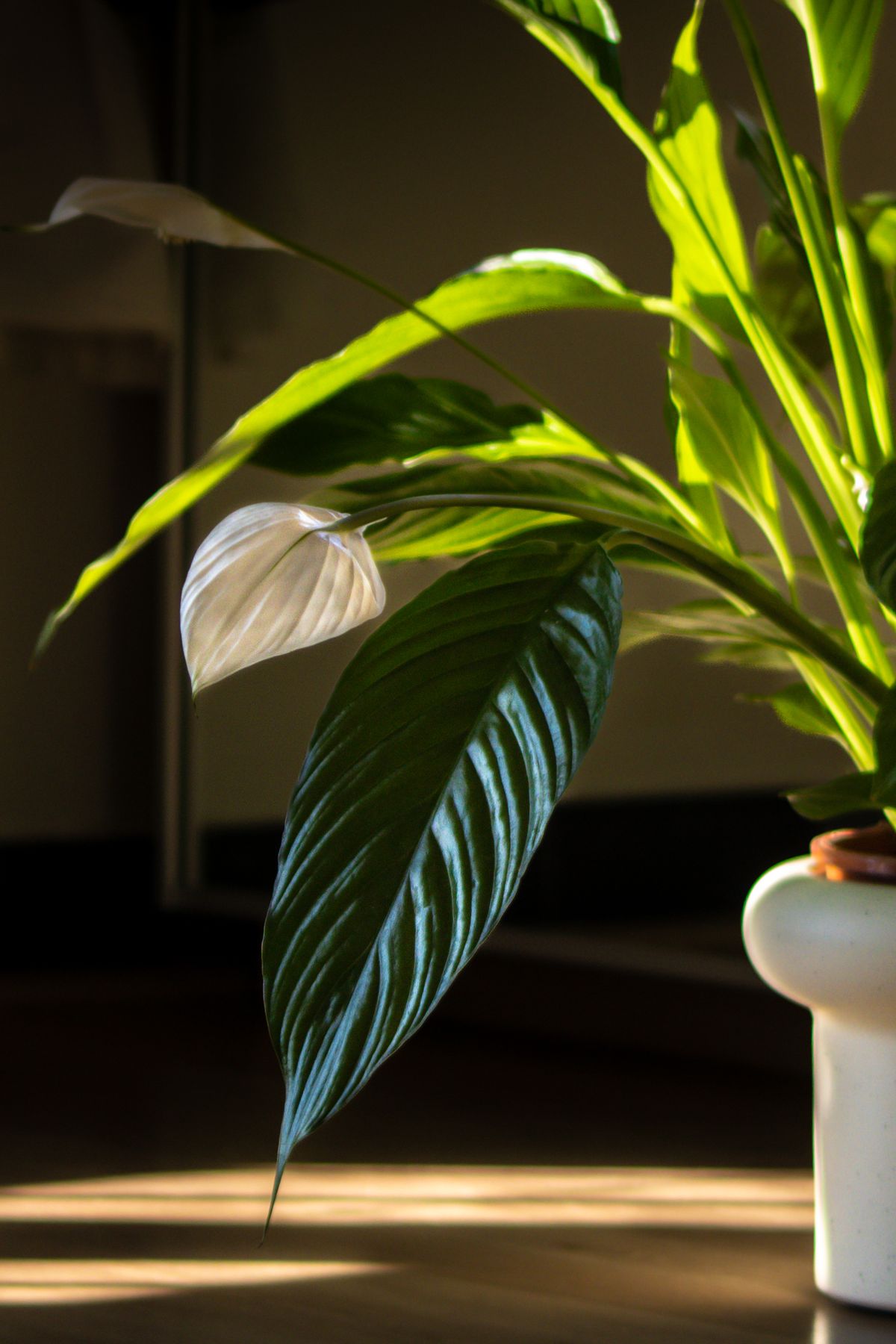
The showy white part of a peace lily flower is a modified leaf called a spathe. It surrounds a central spike, the spadix, that bears the tiny flowers. A spathe often turns green as it ages. That change alone says little about whether the rest of the plant is healthy. Once the whole stalk is fading, cut it close to the base without nicking nearby leaves. Thin scissors that fit between the stems make the job easier than pulling.
Plants grown commercially may flower at times when your plant at home would be making leaves. Give it a growing season under good light before comparing its schedule with a new shop plant. A young division can take time to grow a substantial crown. A healthy plant with improving foliage is worth keeping in the same spot while it builds up. Fertilizer can support that growth if the potting mix is low in nutrients. Use a diluted houseplant feed according to the label while growth is active. Overfeeding can leave salt deposits and damage leaf edges.
A peace lily with deep green leaves that never blooms may still need more light. Move it in small stages and record where it spent the season. If all new leaves are small and the growing point looks crowded, consider the roots and whether the clump has filled the pot. A plant that makes good leaves after a move may flower once the growing conditions have stayed consistent long enough. Avoid changing the pot, the fertilizer, the window and the watering method in a single week unless the plant needs urgent help. It is easier to interpret the next flush of growth when you know which condition changed.
Diagnose dry tips one cause at a time
Start with the history of the pot. Did it wilt several times in the last month? Does it sit where hot air blows over the tips? A brief soil check before watering and a look at the area around the plant can answer both questions. Repeated drying can mark older leaves. A plant next to a heating register might show the most damage on the exposed side. Move it a little away from the airflow and compare the next new leaf. The older tips will keep their dried outline.
Fertilizer residue is another clue. Check the rim for a white crust and look at the soil surface. Mineral deposits can come from fertilizer or from the water supply. When the plant is due to water, rinse the mix with plain water and let plenty of runoff escape. Empty it afterward. If your supply is very hard or has been softened with sodium, try distilled or reverse osmosis water for several cycles. You can trim a brown tip if it bothers you, cutting just inside the dry portion. The color of the new edges will tell you more than a leaf whose damaged part has been removed.
Check the underside for pests when you handle the leaves. Small cottony masses, sticky spots and tiny insects hidden between stalks deserve closer attention. Isolate an affected pot from other houseplants until you identify the problem. Wiping dust off healthy leaves with a damp cloth makes it easier to see the surface. Hold the leaf up with your other hand and avoid pinching its stalk. Because peace lilies contain irritating calcium oxalate crystals, place the pot and any trimmings out of reach of children and pets that chew plants.
Keep a crowded clump manageable
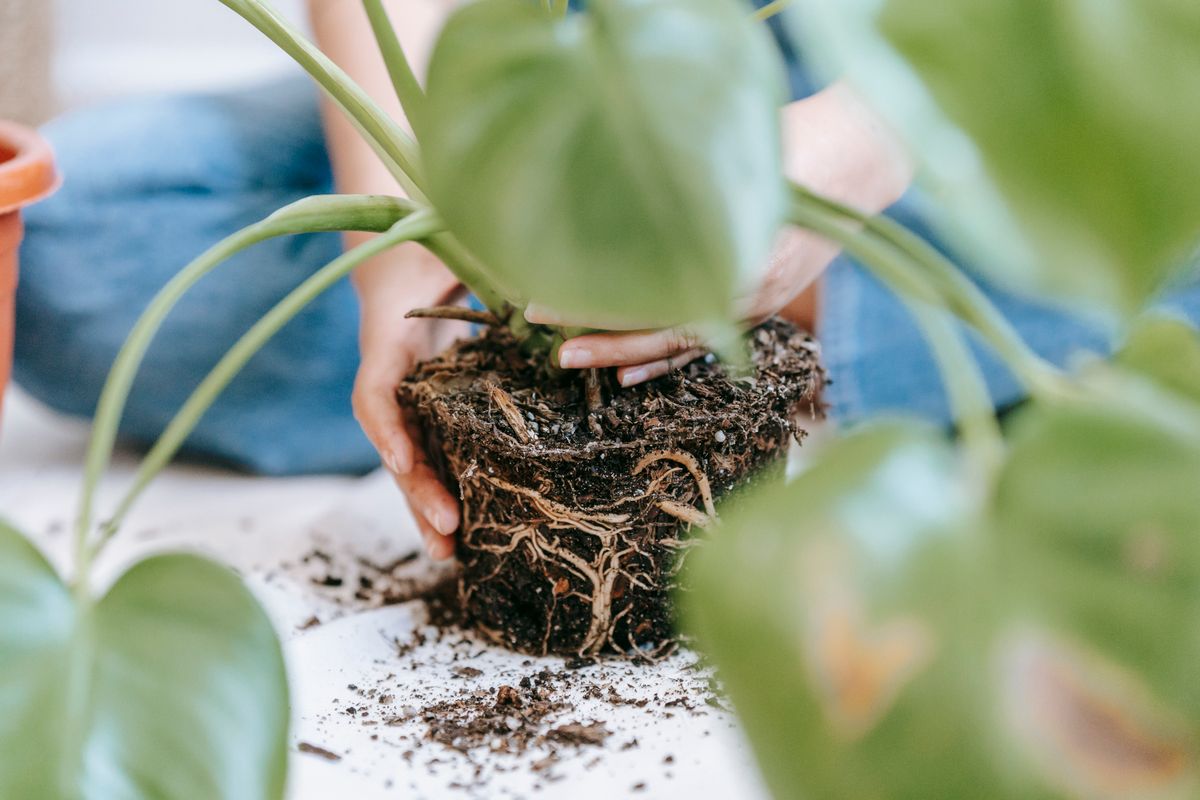
When the roots have filled the container and water no longer lasts long enough to support normal growth, move the clump into a slightly wider pot. Choose fresh mix with some coarse material for air space. Set the crown at its old depth. If you prefer a smaller plant, separate a rooted section instead of increasing the whole pot size. Ease the root ball out, look for an independent group of stems and tease apart the attached roots. A division needs its own crown and some firm roots before it goes into a small container.
A repotted plant may change its drinking pattern. Check the old root ball and the fresh mix around it after several days. They may dry at different speeds, especially if you replaced a fine old medium with a coarser one. Water when the main root zone is approaching dryness near the surface. A large decorative pot can make the plant look settled while hiding a layer of runoff, so keep the liner removable or leave the drainage tray accessible.
Set a pot on a stand if the foliage needs a little more window light without blocking the room. Make sure you can reach it with a watering can and see when the saucer fills. A location you can inspect regularly is easier to manage through flowering and through the quieter months afterward. Once the leaves are growing strongly in that location, the next white spathe can be allowed to unfold at its own pace.
Back to top