8 min read
Make a Container Garden That Can Take the Wind
Keep outdoor pots steady, protect the roots from drying out, and choose supports that move with a plant rather than working against it.
On this page
The pot that never moved all spring can tip on the first windy day after its plant puts out a flush of leaves. The crop has become a sail. A sunny afternoon of gusts can also dry one side of a root ball or tear a tender leaf long before any container falls. In a small garden, the trick is to solve the obvious problem of weight and the quieter problems of exposure together. Start by watching how wind crosses the space. Then put the heaviest intervention where it earns its keep.
Find where the air speeds up
On an ordinary breezy day, watch leaves or a short ribbon held in your hand at different heights. Corners, passageways, and gaps between buildings can funnel air faster than an open area. The garden floor may be calm while the top of a plant bends every few seconds. On the sheltered side of a solid wall, eddies can change direction repeatedly and rattle a stem against its support. Draw a few arrows on a sketch of the area and note places where gusts seem to arrive from more than one direction.
Repeat the observation after a change in the weather. A summer sea breeze and a cold front may arrive from opposite directions. You do not need to wait outdoors in a storm; take notes from a safe position afterward about what moved or dried. If one side of a pot dries first, check whether that face is always in the wind or whether a nearby wall reflects sun onto it. Each cause calls for a different adjustment. A wind screen can help with evaporation from airflow, but it is no substitute for moving a plant off hot paving if heat is the main problem.
Before doing any work, check building rules and keep doors, fire exits, and drains clear. Use only permitted fittings for a roof or balcony and keep pots and attachments inside the railing. If you cannot verify the load limits for a structure, avoid using extra heavy planters or loose ballast. For an exposed high balcony, the most practical answer may be shorter plants and a sheltered indoor position for temporary storm storage.
Use the shape of the container
A wide footprint improves stability more reliably than a tall narrow container of the same weight. Choose a pot with a broad base and a low center of gravity. A broad pot also makes it easier to position an individual plant away from the windward rim. Use a material and size that you can safely move if necessary. If a plastic nursery pot needs to sit inside a heavier outer pot, provide clearance for drainage and prevent the inner pot from rocking. A fitted stand or feet can work; a stack of loose bricks can slide.
Container weight changes as it dries. Try to assess stability when the mix is due for watering rather than right after a soaking. Do not use overwatering to keep a planter heavy. The root system suffers and rain can spill the extra weight into any spaces where you did not want water. Consider holding a planter within a stable freestanding frame designed for the purpose, or sit it within a grouping of other pots that break the direct path of wind. Leave gaps for access and air circulation, and avoid pushing plant stems into one another.
Wheels are useful only if they lock securely and the stand is rated for the saturated weight. Roll the pot into its sheltered position on a calm day to see if you can handle it. A planter that must be lifted over a sill will be harder to move while both you and the foliage are being blown around. Arrange it so a move can happen before a storm and without crossing stairs. Tall containers on stands raise the center of gravity; keep vulnerable specimens low in a windy location.
Filter the wind where you can
A permeable barrier tends to slow airflow more gently than a solid panel. A screen with openings can spread the wind over a broader zone instead of forcing it abruptly over the top or around an edge. On private ground a well anchored trellis with a suitable mesh can help. On a rented balcony, use a permitted installation designed for the wind loads of that site. Never hang an improvised sheet or a solid panel on a railing. A loose or overloaded screen creates a hazard of its own.
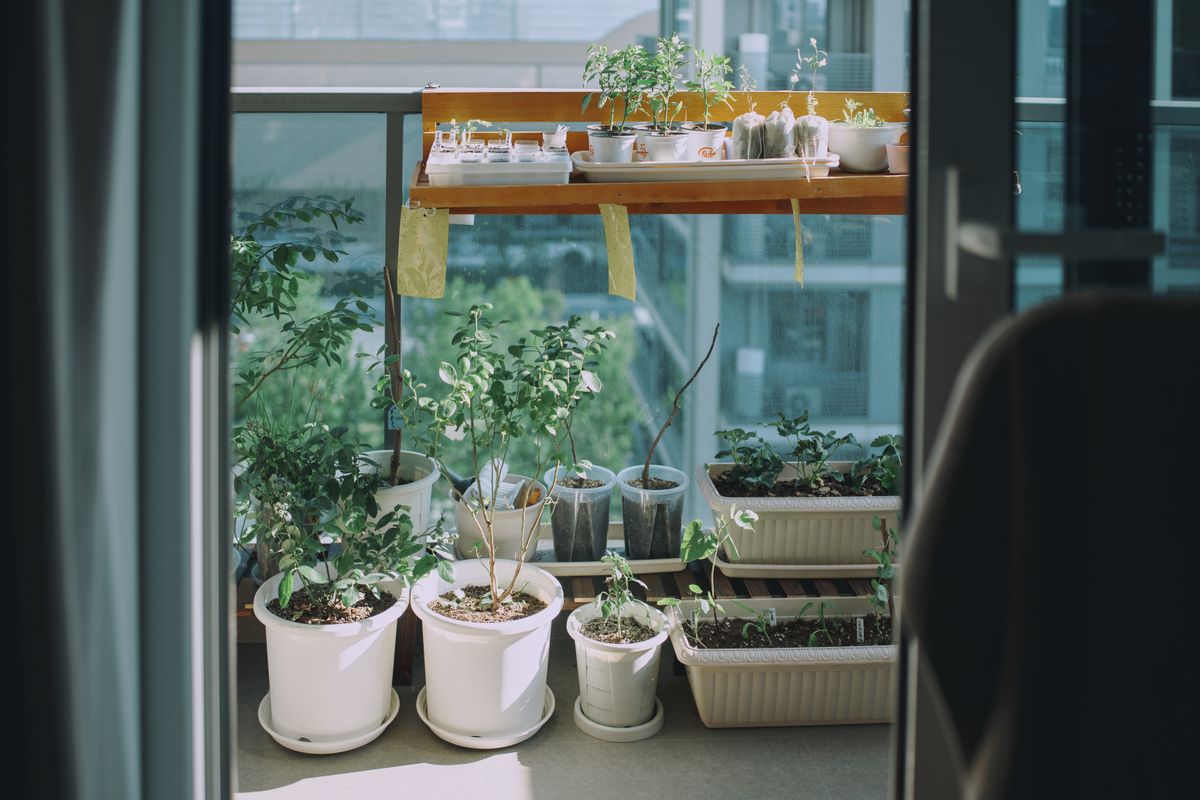
Sometimes the existing building already gives you a good filter. Set a young pepper back from the balcony corner where the wall reduces wind, or put a row of short pots against an existing parapet so the plants stay below its top while establishing. Keep a margin for watering and check whether the wall also creates prolonged shade. Use the sunniest sheltered position for crops that need it and try shade tolerant plants in the calmer low light places. Plants moved into a calmer but darker spot may stop setting flowers if the light change is too large.
Treat a group of containers as several pieces of a small landscape. Low tough plants can sit on the exposed edge, higher delicate foliage behind them. Do not count on leaves alone as a barrier in a storm; the grouping is mainly useful during ordinary daily conditions. A row of potted tall grasses may sound like a screen, but if each grass is in a light pot, the whole row is liable to move. Choose plants that fit their containers at maturity and reconsider anything that grows above the top of a reliable shelter.
Support stems before they lean
Fit supports early so you can guide growth while the stems are flexible. A plant that naturally climbs a net may need very little tying once it has found the openings. A tall fruiting stem benefits from a stake or cage whose base is held securely. If a support is attached only to a small pot, wind acting on the support and foliage can overturn the entire assembly. Use a support and pot combination rated or sized for the plant, or choose a compact cultivar where a large structure is impractical.
A soft tie shaped loosely around the stem and support allows some movement and leaves space for growth. Inspect ties after strong wind and during a growth spurt. Watch for rubbing at the same spot on a stem. A tie that looked loose last week can be tight after rain and warm weather. Cut it away and replace it if it has started to leave a mark. Use several points of support where necessary rather than forcing an entire plant upright with one tight loop.
Reduce avoidable leverage. Harvest fruit when ready so the ends of stems do not carry more weight than necessary. Remove a broken stem cleanly rather than letting it hang and rip farther down. Prune according to the plant's habit, not simply because it is windy. Removing most of the leaves from a healthy fruiting crop can reduce its food supply and expose fruit to sudden sun. If the plant is already taller and more fragile than the spot can accommodate, plan on a shorter variety next season instead of repeatedly cutting it back.
Check water where the wind hits
Wind accelerates water loss from exposed leaves and the surface of the mix. Leaves may wilt during a hot gust even if roots can take up enough water to recover later. Check the mix before watering. If it is dry down into the root zone, water slowly so the entire root ball gets wet. If the mix is already moist and the plant routinely revives by evening, try temporary shelter or adjust exposure instead of keeping the roots saturated.
Compare the windward and sheltered sides of a large container. If drip irrigation wets only one side, roots near the dry side may struggle. Apply water in passes or adjust emitter placement to soak evenly. A thin mulch suited to the plant can slow surface evaporation, but loose light material can blow away. Keep mulch away from the base of the stem and do not substitute stones so heavy they add unnecessary load on a balcony.
An established plant usually tolerates ordinary motion. A nursery seedling or indoor plant transferred outside has weaker leaves and may lose water quickly before roots adjust. Introduce it to sheltered outdoor conditions first. Increase exposure over several days while checking for damage. A few torn old leaves can be cosmetic. Repeated tearing of the new growing point is evidence that the site, the support, or the choice of plant needs to change.
Plan for one genuinely windy day
Decide in advance what moves and what stays. Bring lightweight trays, empty pots, and tools inside. If a tall crop can be relocated safely, move it before the wind rises. Where safe movement is impossible, use an appropriately stable setup from the start and do not attempt adjustments during dangerous conditions. Review the setup after the weather settles. Look at pot feet, support joints, ties, and nearby drains before you look at the foliage. A planter that shifted slightly has shown you its weak direction.
Keep a record of the plants that stayed healthy where they were. A squat pot of thyme on the sunny side and a leafy crop at the sheltered wall tell you more about the space than a garden catalog's photo. Build next year's layout around those positions, leaving a little room to try something new. The aim is to make an exposed site usable on ordinary days and easy to prepare for the difficult ones.
Back to top