8 min read
Watering a Vegetable Garden in Clay Soil
Learn to recognize wet clay below a dry surface, deliver water slowly, and keep the root zone supplied without leaving it saturated.
On this page
A clay bed can look ready for water at the same time its roots are sitting in wet soil. Sun dries the first half inch into a pale crust. A watering can makes the crust dark again, and a few minutes later there are puddles in the low spots. If you put a trowel into the bed before you reach for the can, the soil underneath may be cold, sticky, and heavy. That one check can tell you more than the surface color or how long it has been since you last watered.
Clay soils vary in structure and drainage. A clay soil with stable crumbs and spaces left by roots can accept water quite differently from one that has been pressed flat while wet. What matters for the plants is how readily water enters, where it spreads, how long it stays, and whether the roots have enough air. You can usually improve the way you water without changing everything about the soil first.
Learn how the bed behaves before you change the schedule
Choose a few permanent observation points in the garden. Use one near an established plant, another near the bed's edge, and a third in a patch that usually looks drier or stays wet longer. A spot at the foot of a slope may collect water even when the top of the bed has barely been watered. Dig small inspection holes clear of the main stems, then fill them back in. Check below the crust and down into the rooting zone appropriate to the crop.
When moist clay is reasonably workable, it may form a ball in your palm. Wet clay smears onto your fingers or the trowel and may keep a shiny surface after you press it. Dry clay can be hard enough to chip or fall apart in sharp clods. These observations are approximate and become more useful when you repeat them at the same spot. Note how the soil feels several hours after an ordinary watering and again before the next watering. A shaded bed beside a wall can stay moist for much longer than a nearby bed in full sun.
Watch what happens during irrigation as well as afterward. Water that runs along the surface may take soil and plant nutrients with it. A puddle below a downspout can indicate that water is arriving faster than the bed can absorb. A deep crack can send a narrow stream down past many shallow roots. Soil next to a crack can remain dry while a depression farther down fills. If a bed is difficult to water uniformly, reduce the rate and check several places before increasing the amount.
Give each application time to enter
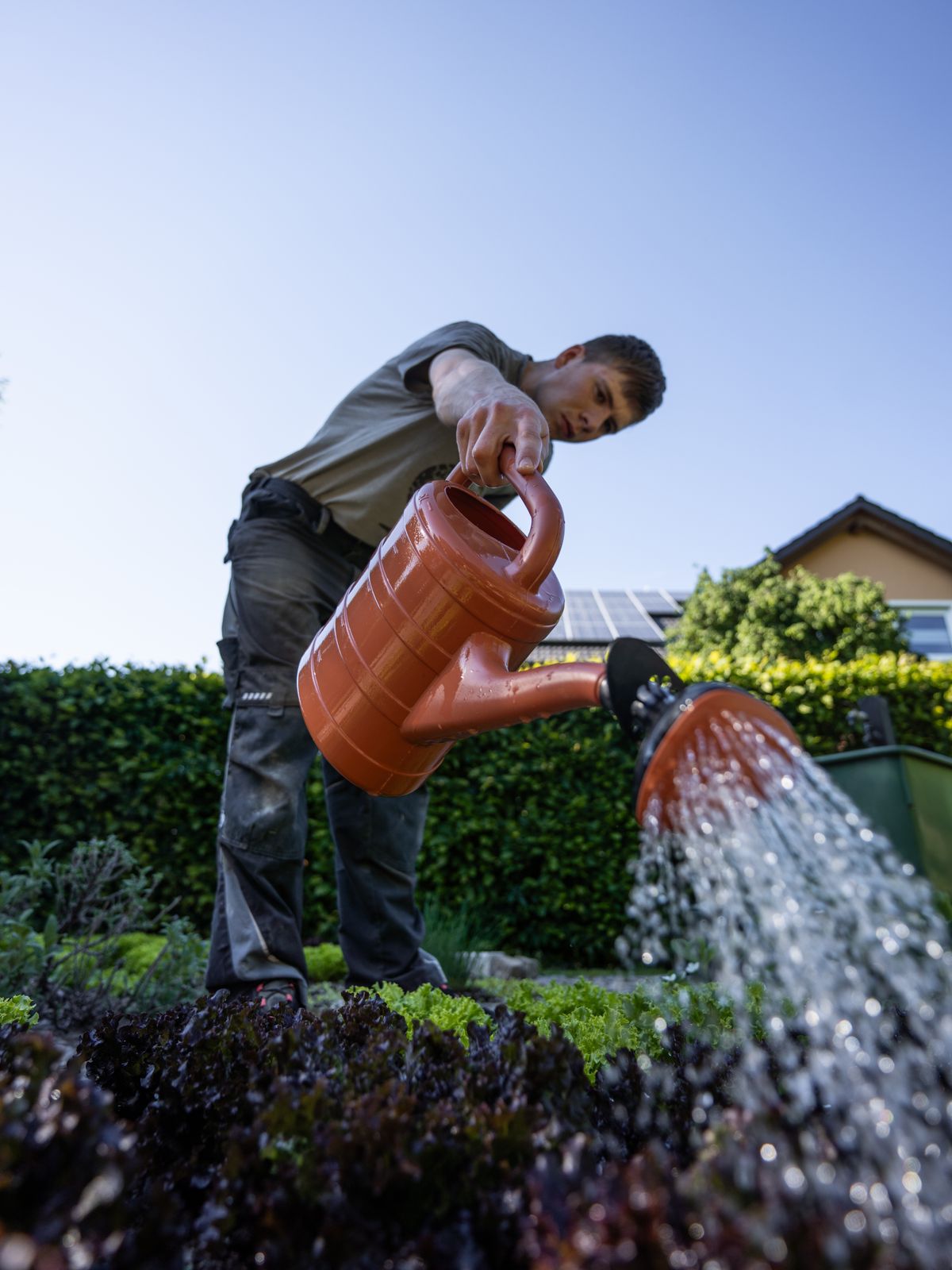
For a small vegetable bed, use a watering can with a gentle rose, a hose set to a soft flow, a soaker, or drip tubing suited to the layout. Avoid a hard stream that makes a hole beside each stem. Start with a short application and pause when water starts collecting on the surface. Let the sheen disappear and the wet area spread before resuming. The pause may take longer in a patch where the soil is compacted or slopes toward a low spot.
Splitting one watering into two or more passes helps when the water is arriving faster than the soil can take it in. It also makes it easier to notice when the amount is already sufficient. A four by six foot bed receives roughly fifteen gallons when you apply one inch of water evenly across its whole area. That calculation is useful for scale. It is not a recommendation to pour that volume onto every clay bed at once. Start with the needs of the crop, the recent rain, and what the trowel shows.
Check where water went after the last pass. Put a trowel into the soil midway between two plants, and then a little farther from the delivery line. If the surface is damp but roots deeper down are still dry, keep the gentle application going and check again later. If the first few inches are sticky and deeper soil also smears, stop and give the bed time to drain. When you use drip, position outlets near the root zone and adjust spacing based on the width and depth of the damp area. The outline on the surface can be misleading.
Keep seedlings and established plants on different terms
A row of just sown carrots or lettuce depends on even moisture close to the surface. Small seeds have little ability to draw on moisture deeper down while germinating. A slow, fine spray can keep the seed line damp without washing it into a clump. Check more frequently during hot, windy weather. Where the surface tends to crust, prepare a narrow seed line with small crumbs and protect it from hard rain where practical. Follow crop directions for covering the seed and avoid putting a thick mulch over the row.
Established vegetables draw water from a larger part of the bed. For these plants, thoroughly moistening the root zone and allowing it to drain is generally more useful than watering the surface every day. A compacted layer or a new transplant with a small root ball can limit what the plant can reach. Check the root ball of a newly planted vegetable separately from the surrounding soil. A peat based potting mix can dry out even while a sticky clay wall surrounds it.
Plants sometimes droop on a very hot afternoon even when there is water at their roots. Recheck a plant in the cool of evening, and check the bed before irrigating. A plant that recovers as temperatures fall may have needed a little shade or relief from wind. A plant that stays limp in moist clay may have injured roots or poor drainage. If one part of a row wilts while the rest stands upright, compare roots and soil moisture in the two places before changing the schedule for the whole garden.
Protect the spaces that let roots breathe
Put regular foot traffic on a path and keep your boots off the bed when it is wet. If you sink or leave a shiny footprint, postpone work that can wait. Repeated pressure squeezes the openings through which water and air move. In a narrow bed, reach from the edge. In a broad garden, a permanent path gives you predictable access without stepping between every plant. Set up the places where you stand while watering and harvesting so they stay usable after a shower.
A loose layer of organic material can soften the impact of raindrops and slow surface drying. Use a light cover around established plants after the bed has warmed sufficiently for the crop. Keep it away from stems and check the soil underneath after a wet week. Where drainage is slow and slugs are active, a thinner layer may be easier to manage. A mulch does not remove water that collects in the root zone. Watch the bed after storms and respond to the direction the water actually takes.
Organic matter can help clay develop better structure over time. Spread an appropriate finished material at a rate that fits a soil test or local guidance, and avoid repeatedly churning wet clay to work it in. Small additions of sand do not reliably turn clay into a well drained loam. They can create a dense mix when proportions are wrong. If the bed is severely compacted, improving access and protecting the surface can matter more than another load of amendment. Let living roots occupy the soil during suitable seasons.
Plan for the water that arrives without your help
Look at the bed during rain. A downspout, pavement, or higher neighbor bed may deliver much more water than you expected. Redirect clean roof water appropriately without sending it onto neighboring land or a building foundation. Observe where water leaves the vegetable plot and keep pathways from forming channels. For persistent pooling, ask local advice about drainage before digging trenches or changing grades. Some problems reflect the whole site, and treatment within a small bed only moves the puddle.
If the soil still sits saturated for long periods, a properly designed raised bed may give crops a better rooting zone. Keep the new bed open to suitable ground where practical and make sure the bottom can drain. Do not fill a depression with a looser mix and assume the wet ground below will absorb anything you add. Crop choice is another tool. Give plants that dislike prolonged wetness the better drained position and leave the spots with chronic standing water out of the vegetable plan until the issue is resolved.
An ordinary rain gauge can improve your judgment of what the bed receives, especially when a storm varies across the area. Place it clear of roofs and trees and empty it after recording the reading. Compare its result with soil moisture where the vegetables grow. A shower that appears adequate at the gauge may miss a bed under dense foliage, and one corner may get more than the gauge suggests because of runoff.
Write down the last rain, the length of your irrigation, and how deep the moist zone reached. Repeat that check after a dry week and after a wet one. In time you will know which parts of the bed accept a steady flow, which need two passes, and when to leave the watering can by the door. Clay is easier to manage when the decision starts a few inches below the surface.
Colorado State University Extension guidance on irrigating vegetables
Back to top