7 min read
Keep Slugs Away From New Seedlings
Read the damage after dark, remove the best hiding places, and protect the youngest plants until they can tolerate a little feeding.
On this page
A lettuce seedling can disappear between supper and breakfast, leaving a stub so neat that it looks as if someone used scissors. A row of beans may have holes in the first leaves but grow on without much consequence. The two cases do not need the same response. Start with the plants that cannot afford to lose a leaf, find out whether slugs are actually responsible, and make those plants harder to reach. The rest of the garden can wait until you have evidence that it needs the same protection.
Read the damage near the ground
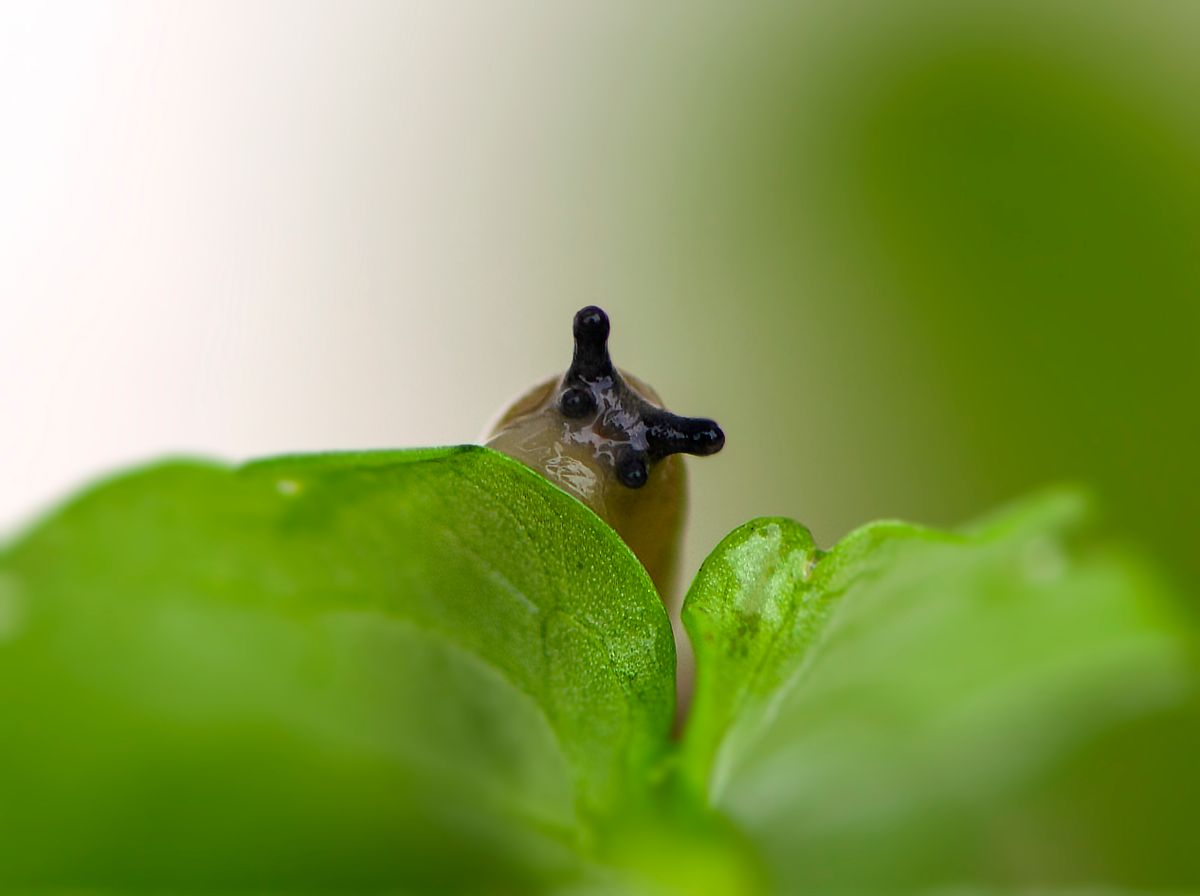
Look at the pattern before you decide which pest to manage. Slugs can rasp irregular holes in leaves, remove a seedling's growing point, or leave a surface scraped and pale. Shiny dried trails on the soil, pots, or leaves are helpful evidence. A trail is easiest to see when light reaches it from the side. Not every hole is made by a slug. Caterpillars leave droppings and can hide along leaf veins. A cutworm may sever stems at the soil line. Birds can pull seedlings out without eating much of the leaf.
Mark a few damaged plants and check again at dusk or shortly after dark, especially after rain. Use a flashlight and look underneath leaves and pot rims rather than sweeping the beam only across the bed. A wet night often brings more activity. If a damaged row borders a dense damp patch, inspect the edge first. Slugs can travel out to feed and hide elsewhere during the day. If you do not find any, look again when conditions are damp before deciding you need a general treatment.
Decide how serious the injury is. A transplanted seedling with several leaves may tolerate modest damage while it develops new growth. A newly emerged lettuce with a missing growing point is unlikely to recover. Keep notes on where fresh damage occurs. Old holes enlarge as a leaf grows, which can make damage look as if it is continuing even after the cause is gone. Look for fresh marks on young leaves and compare photographs if the distinction is unclear.
Take away cover in a narrow strip
Walk a short route around the vulnerable crop and move anything that makes a cool damp shelter immediately beside it. Boards, upturned trays, unused pots, and thick leaves pressed against the ground are common refuges. Look underneath before moving them. Removing one hiding place next to the crop is more useful than clearing every corner of the garden. Some cover supports beneficial insects, and dry soil can harm young plants. Keep the changes focused on the narrow area from which slugs can readily reach the seedlings.
Pull thick organic mulch back from very small seedlings while they establish if you are finding slugs there. Leave enough open ground to inspect the soil and see fresh trails. In dry weather you may still want mulch over other parts of the bed to protect moisture. Push suitable material back once the stems are stronger and the leaves no longer rest against the surface. A clean strip is a temporary management choice, not a rule for every bed all year.
Water in the morning when practical and aim water at roots. Night watering keeps the surface damp during the period when slugs are most active. In warm weather your seedlings still need adequate moisture. Check root depth rather than withholding needed water to dry the whole bed. A slow narrow watering line can keep roots supplied without soaking every path. Move any empty saucers or other rain catchers that create persistently wet hiding places. If a roof drips into one corner every evening, change the route of the water before doing another round of pest control.
Put the effort around the seedlings
Try a small protective collar or a suitably ventilated enclosure around an individual high value transplant, following the product's directions. Check that no slug is already inside and that foliage does not bridge the edge. Insects and pests can enter through gaps, and a collar cannot guarantee protection. Inspect it after rain and remove it once it is no longer useful. A cover that heats up in direct sunlight can damage a transplant faster than a little slug feeding. Keep enough room for air and normal growth.
Where birds and insects also cause damage, a lightweight mesh cover can be useful for certain crops. It does not reliably exclude slugs already in the bed. Check the ground before fitting it and make sure its edges do not make attractive day shelters. Lift a corner regularly and look at the plants underneath. Do not leave covers on crops that require insect pollination when flowers open, unless you have a suitable plan for pollination. For a handful of lettuces, a clean tray of spare transplants kept in a protected place can be simpler than defending every gap.
Handpick after dark where it is practical. Wear gloves and use a container, particularly if the slugs are small and the ground is wet. Dispose of them according to local guidance, especially where species are invasive or regulated. A flat board set deliberately away from the plants can act as a monitor: check underneath in the morning, remove slugs you find, and take the board away if you are no longer checking it. Left unattended, it is simply another shelter. A short routine over several damp evenings often tells you whether the problem is local or likely to recur across the garden.
Know what barriers and products can do
Some barriers are useful in particular setups and disappointing in others. Copper bands need a continuous clean path around a pot, no leaves bridging it, and no slugs living in the pot already. Performance varies. A scattering of sharp material on wet ground is rarely dependable. Crushed shells or coffee grounds are not substitutes for inspecting a vulnerable row. Avoid putting salt in the garden; it can harm plants and soil and does nothing to correct the damp shelter that attracted the slugs.
If repeated serious losses justify a bait, choose a product authorized in your area and labeled for the crop and location, and follow its instructions. Read storage, child, pet, and wildlife precautions even for a product marketed for gardens. Never apply an unlabeled product, assume that two brands with similar packaging are interchangeable, or heap bait in places where animals may find it. Where a narrow strip of handpicked plants is already recovering, there may be no reason to treat the whole plot.
A trap can help confirm the presence of slugs, but it rarely protects a whole garden by itself. Consider whether it might catch other animals or collect more rain than you can manage. A monitor only earns its place if you check it. Focus on evidence of feeding on the plants rather than counting whatever has gathered in a trap. The aim is a row of plants that continues growing, not a garden with no slugs at all.
Help the next sowing get past the vulnerable stage
For crops that transplant well, start a small reserve in a clean protected tray. Plant sturdy young plants with several leaves if repeated losses are occurring at emergence, and protect the transplant until it has begun putting on growth. Some crops dislike root disturbance and are best direct sown. In those rows, prepare a fine seedbed without large damp clumps, mark the position, and check closely as the seed leaves appear. Do not wait to look until the row has been empty for several days.
When you replace plants, record which section repeatedly loses them. A strip by a leaking downspout or a dense border is a different site from the open middle of a bed. Move the youngest crop away from that edge if you can, or plant there when the soil surface dries faster. An established crop may grow acceptably in the same spot that is difficult for seedlings. Use the pattern to choose what you plant and when.
Once fresh damage stops or growth starts to outpace it, reduce the interventions. Take away temporary covers, keep the route for watering clear, and check after the next wet spell. Save the two observations you will need next season: where you found the slugs during the day and when the first seedlings were attacked. Those details make the next response smaller and earlier.
Compare a protected corner with an open row
When several methods seem plausible, protect a short segment of one sowing and leave an equally vigorous nearby segment under your usual care for a few nights. Mark them so you do not confuse the rows. Compare fresh feeding rather than the appearance of already damaged leaves. If both sections improve when the weather dries, the weather may have done more work than the barrier. If the protected segment keeps its growing points during several damp nights while damage continues beside it, the intervention has earned further use.
End the comparison early if the open segment is at risk of disappearing. A home garden trial should help you save plants, not consume the entire crop. You can often learn enough from two nearby pots or from observations on different sides of a single bed. Keep the conditions as similar as you can and record a rain event that might change what you see.
Back to top