7 min read
Hardening Off Seedlings Before Planting Day
Give indoor seedlings a gradual introduction to outdoor light, wind, and temperature so that they can keep growing after transplanting.
On this page
On the first mild afternoon in spring, an entire tray of seedlings can fit on the back step. In the house the same plants sat under a grow light with no wind and a narrow range of temperatures. Outdoors the light is stronger, the air moves continuously, and a small pot can dry faster than it did on the shelf. The adjustment that matters happens while the roots are still protected in their pots and you can carry the seedlings back inside.
Give the transition roughly a week or more and leave room to repeat a day if conditions change. If the weather is very cold, hot, or windy, the process may take longer. The plan should follow what the plants experienced, rather than how many boxes are checked on a calendar. A seedling that spent several afternoons outdoors under heavy cloud has had practice with moving air and temperature changes. It may still need a short introduction to direct sun when the weather clears.
Set up a good first destination
Choose a spot with bright shade and some protection from wind. An open porch, the sheltered side of a fence, or a bench under a tree can work. Walk around the spot at the time you plan to use it. Shade at breakfast can be direct sun by lunch. The wind can funnel around a house corner even when the nearby lawn feels calm. A position on the ground may be cooler and closer to slugs than a shelf with air beneath it.
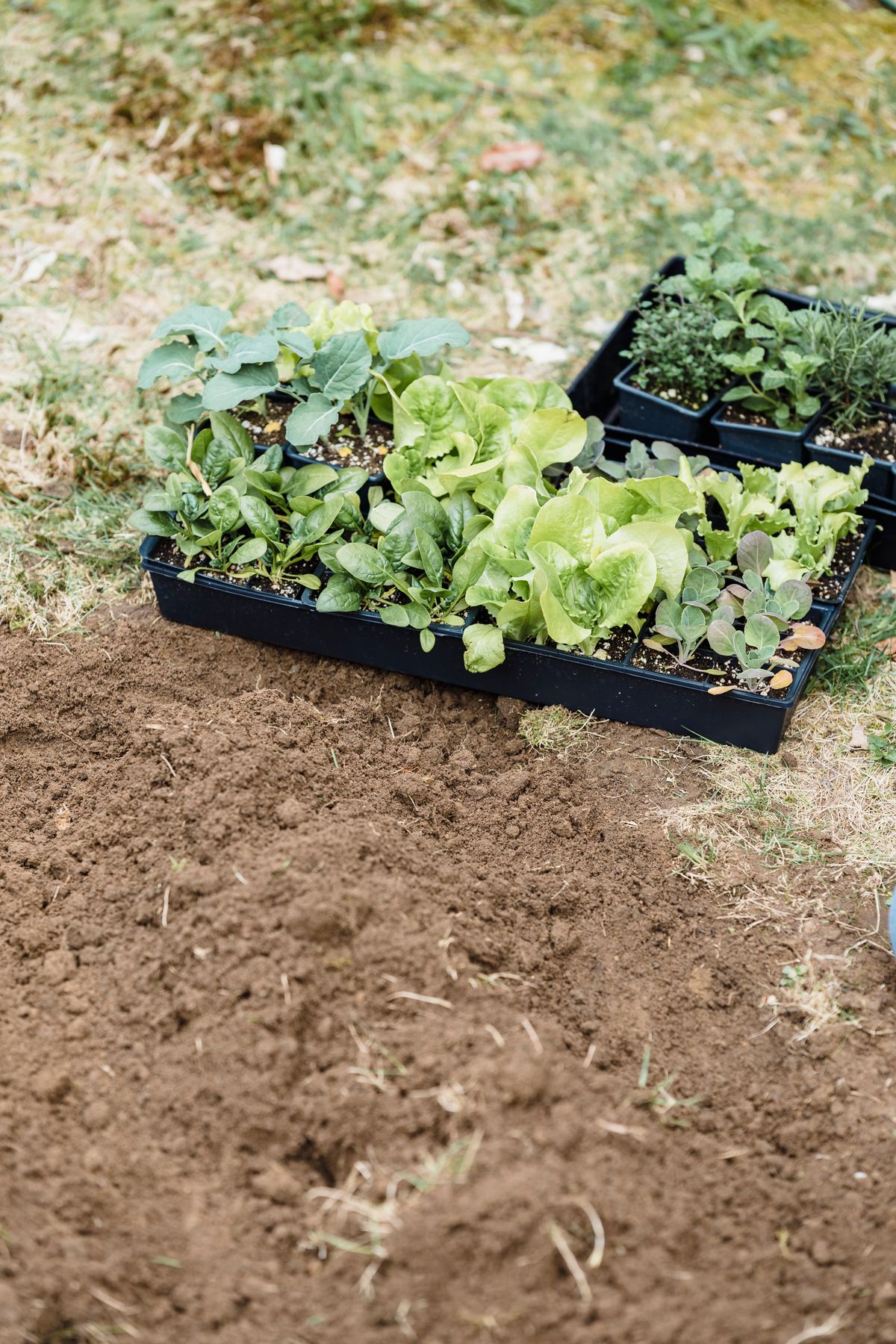
Put the pots in a sturdy flat you can carry with one hand free for doors. If the tray is solid, empty any rainwater before bringing it inside. For small cells that tip easily, use a ventilated crate or another flat to keep the pots upright. A tray full of seedlings can be top heavy when some plants are much taller than others. Mark the trays with crop names, since you may end up carrying hardy crops and tender crops on different schedules.
Check potting mix moisture before going out. If the soil is dry enough that the cells have become light, water and let the excess drain. A very small cell holds little reserve. Keep enough room between plants that you can inspect the mix and notice uneven drying. Avoid standing water in saucers. Damp roots in a sheltered tray will still need oxygen. In a warming sunbeam, a black cell at the edge of the tray can dry ahead of the rest.
Build outdoor exposure in useful steps
For the first session, set seedlings outside in bright shade for an hour or two in comfortable weather. Bring them in while the plants still look steady. If the first tray wilts within minutes, move it to shelter and check the pots. The combination of wind and low water in a cell is enough to overwhelm tender leaves. Give plants time to recover and try again with less wind and a shorter session.
Over the following days, lengthen the stay in the sheltered position and add a short interval of gentle morning sun. Half an hour is a reasonable start for plants that have had almost no direct sunlight. Increase the time when they look steady and temperatures suit the crop. As the plants adjust, let them experience some ordinary air movement. Keep them away from sharp gusts and try to handle the trays before winds pick up. Repeatedly folding leaves or stems can damage a plant faster than it adapts.
Start with a schedule you can actually follow. A person who leaves home at eight and returns at six may be able to put trays in shade briefly in the morning and spend longer outside on the weekend. For the middle days, use a genuinely sheltered location and check the hourly forecast. If the forecast is poor and you cannot get back in time, keep the plants indoors. A slow transition is less work than replacing all the transplants.
Let the crop decide what a suitable day looks like
Warm season vegetables need protection from chilly nights and cold soil. Tomatoes, peppers, basil, and cucumbers differ in their tolerance. Wait for weather and soil temperatures suited to the crop before you plant it out. A warm noon forecast says little about conditions before dawn. When spring nights are uneven, bring tender trays in and keep the plants in good light. A calendar date for average last frost is a planning aid. A current forecast and the location of your bed tell you more about a particular night.
Cabbage family transplants and many cool season greens can use cooler days than peppers. Their cold tolerance still depends on species, variety, age, and the protection they have had so far. The fact that a mature crop survives cool weather tells you less about the tiny transplant from a warm room. Keep trays in separate groups if it lets you handle each more confidently. The cabbages can continue outdoors during a stretch that delays the basil.
You may see advice to reduce watering or stop fertilizer during the transition. Avoid pushing seedlings into severe wilt or starving them in tiny cells. Let the surface dry as appropriate between waterings and pay close attention to the whole root ball. If plants need to stay in the tray longer, inspect roots and pot up any that have become very crowded. Growth that pauses briefly during adjustment should resume when the roots have room and conditions are suitable.
Learn what early stress looks like
Sun injury often shows up as pale, papery patches on the parts of the leaves that received the strongest light. The marks may appear after the tray has come indoors. The damaged tissue will stay marked, so judge recovery by the condition of younger leaves. Give the plant gentler exposure for a few days, then increase it slowly. If the new leaves appear healthy and the growing tip survived, the plant may continue developing.
A dry tray can look normal from across the porch and wilt suddenly. Pick up a cell and feel its weight. If the root ball is dry, water thoroughly and allow it to drain in shelter. If the root ball is already saturated, more water will do little for a plant exposed to strong wind or sun. Examine the stem for damage and make sure holes are clear. A tray left in a pool after a storm may have struggled for air overnight.
If several seedlings lean in the same direction after an outdoor session, note how the wind reaches the spot. A low screen with gaps can reduce gusts while allowing ventilation. If growth folds only at one point on the stem, move the tray and check for breaks. Tall seedlings can be set close enough to support one another during transport, then spaced when they are safely on the bench.
Adjust the plan when spring changes its mind
If a front brings three cold days in the middle of the transition, keep tender crops inside under suitable light. Resume outdoor time a step below the last session that went well. A tray that spent an hour in gentle sun before the front can start with another short morning session rather than staying outside for a full day. Consider the wind as well as the temperature when choosing the first outing after a storm. Spring often gives you a bright day with very dry air, and that combination can take a surprising amount of water from a small seedling.
If you bought seedlings, ask whether they were outdoors or in a heated greenhouse. A plant purchased from an open nursery bench may have experienced conditions similar to your garden. A plant from a greenhouse display may need more gradual exposure. Leave it in a sheltered place long enough to observe the response before you move it into the bed.
Move to the garden during a quiet weather window
Choose a calm, overcast period or the later part of a mild day when possible. A transplant has to maintain water supply while its roots begin to enter different soil. Water the cells before planting and slide the plants out with their roots intact. Prepare the holes ahead of time so the roots spend little time exposed. Follow crop guidance for planting depth. A tomato can often be planted deeper than it grew in the pot. Many other plants are better left near their existing depth.
After planting, water the root ball and nearby soil. Press lightly enough to close large gaps without packing wet ground. Revisit the bed the next morning and again after the first sunny afternoon. If the weather shifts, a supported cover can moderate sun or wind for a short time. Keep the cover from flapping against leaves and use a setup that allows enough air to prevent overheating. Remove or vent it when conditions are suitable.
If possible, keep one or two spare plants for several days until you know the bed is settling. Label them and give them enough light and water in the meantime. Record the transplant date and the weather so you can improve your plan for the next batch. The most useful measure of a successful transition is the first healthy new growth after planting. Watch the tips, check the roots' access to moisture, and give the seedlings time to take up their new space.
Cornell Cooperative Extension guidance on managing garden transplants
Back to top