7 min read
Growing Marigolds That Flower Until Frost
Match French, African or signet marigolds to the space, then use warm sowing conditions and regular deadheading to keep the plants productive.
On this page
A few marigolds can give a sunny edge some definition before the rest of the border reaches its full size. The plants look quite different depending on what you choose. Some make a low row of small orange flowers. Others carry large heads on upright stems and need room to stay dry after rain. Choosing by size makes the first planting easier to look after. The next decision is whether you want to raise seedlings or sow into warm soil where the flowers will grow.
Read the label before planning the row
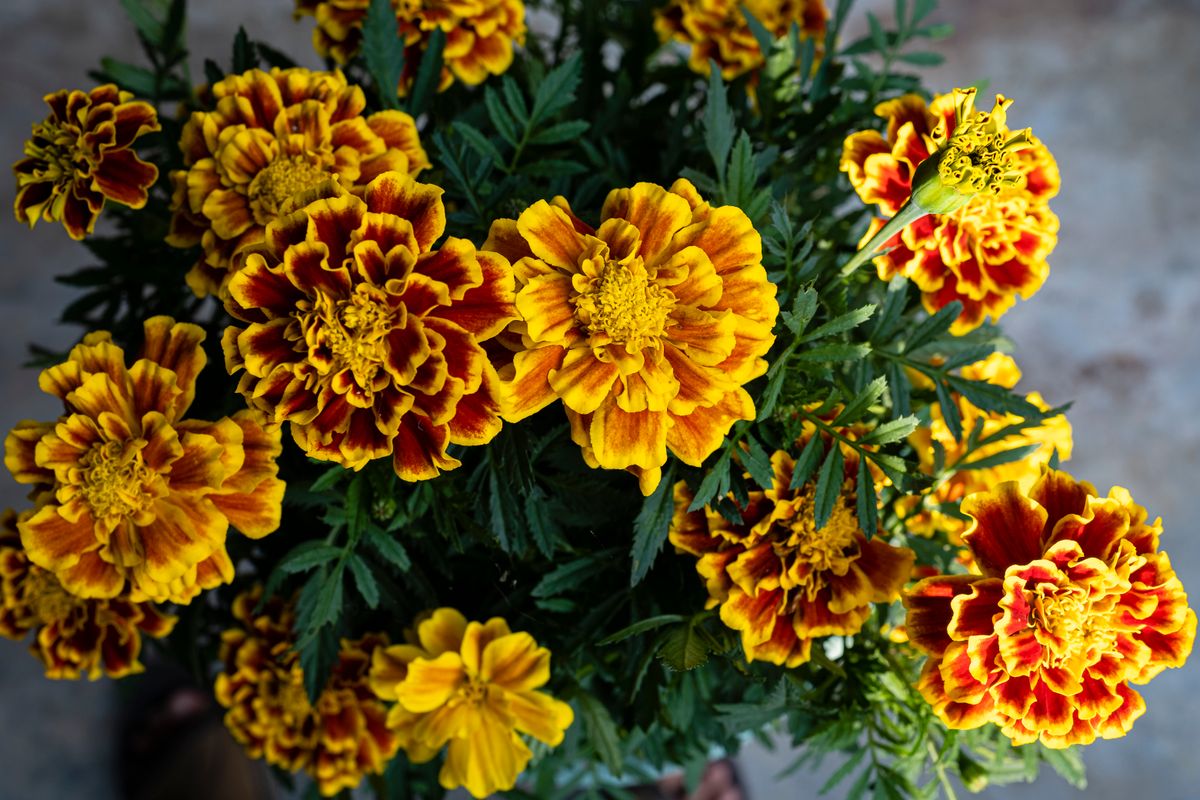
French marigolds, Tagetes patula, often grow into compact, branching plants with small to medium flowers. Many have orange, red or yellow markings and are suitable for a low edge. African marigolds, Tagetes erecta, commonly produce bigger rounded flowers and taller plants, though compact selections also exist. Signet marigolds, Tagetes tenuifolia, have finely divided foliage and numerous small flowers. Their airy habit suits a pot or a looser patch. Check the expected height and width on the cultivar label, since names alone give a rough guide.
Decide whether you want a continuous edge or several larger clumps. Use compact types where a path passes close to the bed. Place taller ones where the stems can catch the light without leaning into the walkway. A group of two or three large African marigolds can be easier to support than several placed in a straight exposed line. Smaller flowered varieties tend to carry less weight on each stem. Consider that difference when you choose plants for a site that receives heavy rain.
Pick a spot with direct sun for much of the day and soil that drains readily. Shade can delay flowers and make the plants stretch. A low bed beside a downspout can remain wet after the foliage has dried. Use a different place or improve drainage across the bed before planting. If you are adding marigolds near vegetables, leave room for the crops to mature. A tidy row in spring can restrict access to a tomato plant by late summer if both grow wider than you expected.
Sow when the seed can stay warm and moist
For direct sowing, wait until frost danger has passed and the soil has warmed. A soil temperature around 65 degrees Fahrenheit is a useful guide for marigolds. Rake a level surface, mark the row and sow at the packet's depth. A light cover of fine mix is usually enough. Water gently so the seeds do not collect at the lower end. Keep the seeded area lightly moist until the seedlings emerge and check it after strong winds or heavy rain.
Once young plants show true leaves, thin them to the spacing for the variety. Choose seedlings in good positions even when the largest plants have come up together in one spot. Snip extra seedlings if pulling would disturb roots you are keeping. In a short row, setting a spare seedling into a gap works best while it is still small. Lift it with a little soil and water it in. Mark the gap and check it the following day if the weather is dry.
Start seed indoors several weeks before the expected planting date if you want early flowers. Use clean cells and seed starting mix. Keep trays warm and move them under strong light as soon as shoots come up. Remove any cover used for germination so air can move around the leaves. If seedlings lean or stretch, increase light and give them more space. Transplant after a period of hardening in shelter, gradually increasing direct sun and wind. If a tray has filled its cells before frost risk passes, move the strongest seedlings into slightly larger pots.
Give transplants room to build roots
Water the cells or nursery pots before planting so the mix holds together. Dig a hole a little wider than each plug and set the seedling at its old depth. Draw the soil around the roots and water the planting. A plant purchased in full bloom can have many roots winding around the bottom of the pot. Ease apart a few of the outer roots if they are tightly packed. Keep the rest of the root ball intact and give the plant time to establish.
For a container, choose a pot with drainage holes and leave space below the rim for water. A compact cultivar can share a planter with other annuals that use similar light and moisture. Consider how their leaves will meet by midsummer. A signet marigold can mound out over the side, while a strongly upright variety may suit the middle. Water the entire pot and check how soon it dries in its final position. A window box in strong sun can need attention more often than a bed even when both were planted the same day.
Water newly set plants as the surrounding soil starts to dry. Once established, marigolds can tolerate some drying. Check near the roots after a quick shower and water deeply when needed. Keep irrigation directed toward the soil if the plants are crowded or if evening foliage stays damp. A light mulch can reduce weeds and splash. Leave a small gap at the base of each plant. Damp material pressed against the stems can hide decay and make small slugs difficult to spot.
Cut old heads before the row starts to thin out
Find the stem below the faded flower and snip above a leaf pair or side shoot. On a large flowered plant, check behind the finished head for a developing bud you want to keep. Picking off only the dry petals leaves the developing seed head on the plant. If you want prolonged bloom, take the whole spent head. Check a formal edging row from both sides so the inside is as easy to work through as the edge you see from the path.
A tall plant can develop a lean when several flowers open on the same side. Put a stake in near the outside of the root zone and tie loosely below a strong fork. For a group that leans together, a line along one side can support several plants at once. After rain, check the largest heads for damage and remove ones that have gone soft. Give the plants enough room to dry before making a second round of cuts. Keep pruning tools clean if a diseased plant has been handled.
When the row grows green and dense with few new flowers, check sun and fertility. An established plant receiving strong light and growing in fertile soil may not need much additional feed. Add nutrients according to soil needs or the directions for a container fertilizer. Check the potting mix label first. Too much nitrogen can increase leaf growth. If many plants have few buds at once after a very hot period, see how they respond when the weather moderates before replacing them.
Check the drainage holes of a container that remains damp well after nearby pots have dried. Roots or debris can block a narrow opening. Raise the pot a little and make sure there is a clear path for runoff. If neighboring plants have spread over it, trim them back to restore airflow.
Look closely when flowers or leaves begin to fail
Examine the stem at soil level if a plant wilts despite damp ground. Soft tissue and constantly wet soil point toward a root or crown problem. Check drainage and reduce irrigation if the rest of the planting is staying saturated. In hot dry weather, spider mites can mark leaves with many tiny pale spots and sometimes leave fine webbing. Inspect the undersides of leaves. Ragged holes on tender seedlings can have a different cause, such as slugs. Look at the bed when the likely pests are active before choosing a response.
Grow marigolds for flowers and the insects they attract. Their performance as a companion plant depends on the marigold species, the other crop and the pest involved. A ring of flowers should not take the place of checking the vegetable bed for damage. If you want to see how an edging planting affects the garden, use the same watering and cultivation on both sides of a row and note which insects actually visit. Keep the marigolds from shading the crop while you watch.
Leave a few heads to mature if you want seeds. Gather them after the heads turn dry, open them over paper and store the dry seed in a labeled envelope. Hybrid or freely cross pollinated plants can give seedlings with different flowers. Record the parent's habit as well as its color. Next spring, compare your saved seed with a small row of the original variety. Whether the plants hold their shape, fit the path and continue blooming after rain will tell you which ones earn the next planting.
If you grow larger marigolds for the vase, cut a few stems just as the blooms become full and firm. Use a narrow jar for the shorter stems and remove leaves below the waterline. The foliage has a strong smell when handled, so try a small arrangement first if scent matters indoors. Frequent cuts from a vigorous plant can also keep the bed producing. Choose blooms with enough stem to reach the water even after you trim their ends the next day.
Back to top